How one architecture graduate found a career in VDC
Are you prepared for what’s next in AECO?
You don't need a BIM resume to build a BIM career
The construction industry has a talent problem. But ask anyone hiring for digital roles right now, and you'll hear the same thing: the issue isn't a shortage of capable people. It's a shortage of people who know this path exists.
In an episode of Bridging the Gap: The Conversation, host Kelli Hogan sits down with Brennan Behrens, a first-year VDC Specialist at PCL Construction, to hear what the industry looks like from the other side of the talent gap. Watch the full conversation here, or read on for the key takeaways.
From architecture school to active job site
Brennan graduated from Studio 804, a design-build graduate program at the University of Kansas where students design and physically construct high-end residential buildings from the ground up, pouring concrete, doing framing, running electrical. The program produces graduates who can think spatially, work with complex software, and get their hands dirty on site.
PCL Construction had been recruiting from the program for over a decade. What they recognized was a profile that translated directly into VDC: design thinking, software fluency, and hands-on construction understanding, all in one candidate.
"We had a few companies come out and say, 'You guys are really capable with this skill set you've developed. We don't want you to get rid of that and do a whole new training thing. We want you to come use that skill set, learn some new stuff.'"
Brennan Behrens, VDC Specialist, PCL Construction
That reframing, treating adjacent skills as an asset rather than a gap to fill, is exactly the mindset shift the industry needs more of.
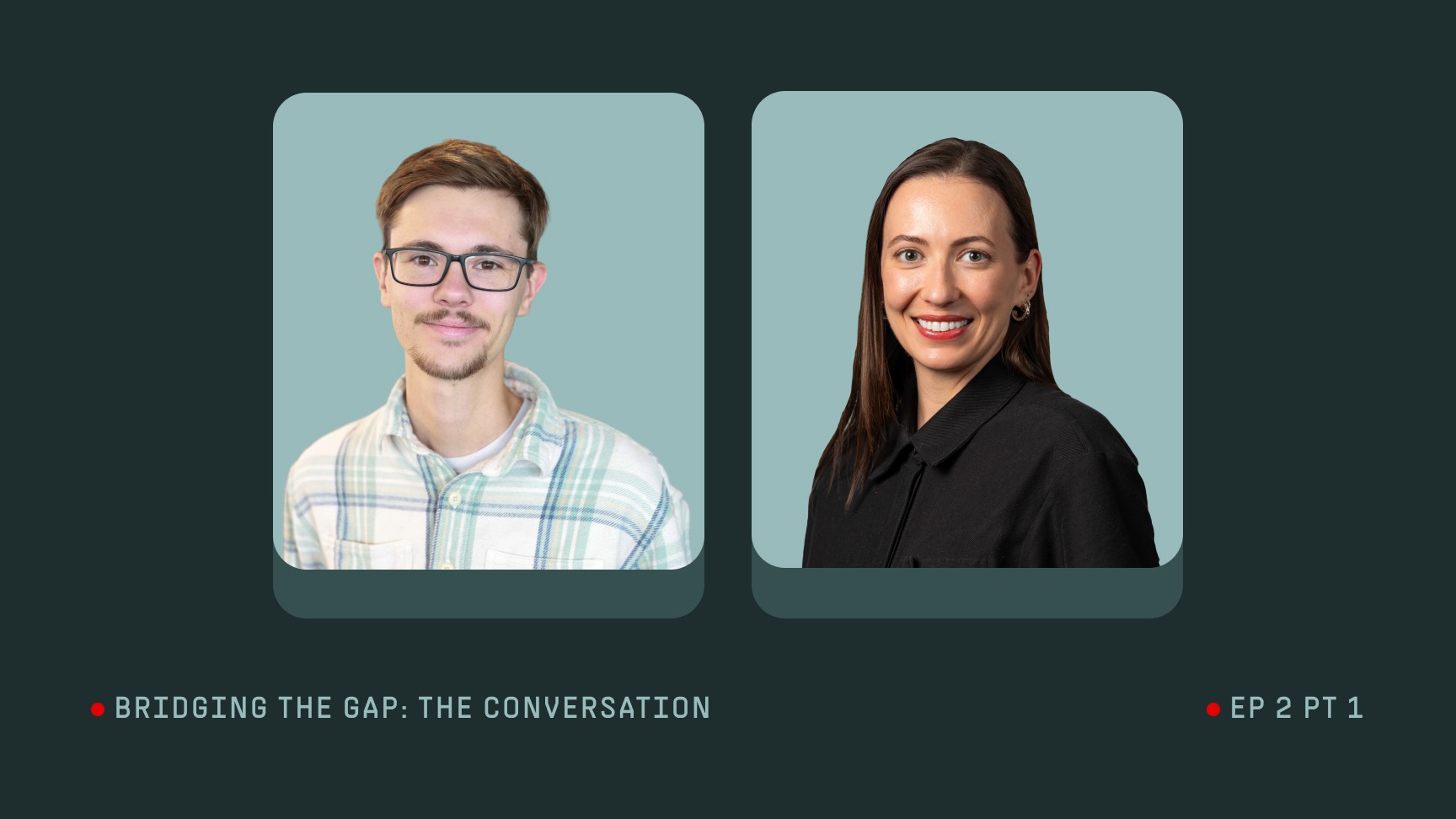
Watch the webinar here.
What a VDC role actually looks like day to day
One of the biggest barriers to recruiting from outside the traditional pipeline is misperception. Construction, for many people outside the industry, still conjures a narrow image. The reality of a VDC role in 2026 looks very different.
For Brennan, no two days are the same. One day he's on-site flying drones. The next he's coordinating with subcontractors and design teams. The day after, he might be processing laser scans or 3D printing components for review. The work is collaborative, varied, and consistently demanding in the best way.
"Everything is way more group-oriented than people are maybe expecting. It's always problem-solving."
Brennan Behrens, VDC Specialist, PCL Construction
The siloed image of construction doesn't reflect how integrated modern project delivery has become. VDC professionals sit at the intersection of design intent and physical reality. They need to communicate effectively across the entire project team, and that requires a very particular combination of skills.
The skills that actually matter in VDC
Brennan is clear on what has made the difference in his first year, and technical proficiency is only part of it.
Soft skills that define success:
- Flexibility. The ability to pick up new tools and workflows independently, without waiting to be taught.
- Curiosity. A genuine drive to understand how things work and where technology can add value.
- Communication. Translating complex coordination into language that works for every stakeholder on a project.
- Problem-solving. Approaching each day as a series of challenges to work through, not a fixed routine to follow.
- Teaching ability. The capacity to bring colleagues along on new tools matters more than most job descriptions acknowledge.
That last point is worth noting. Brennan has found himself teaching drone operation, laser scanning, and 3D printing to colleagues across age groups and experience levels. What he's observed is instructive for anyone building a team.
Younger team members often pick up interfaces quickly, with the muscle memory of gaming controllers and tablets transferring naturally. Experienced project managers may take longer with the hardware, but they immediately understand why it matters.
"You can see the excitement. Like, 'Hey, this is super interesting. It might not be easy for me to learn, but I get where this goes. I can use this.'"
Brennan Behrens, VDC Specialist, PCL Construction

If you’re a hiring manager…
The talent pipeline isn't broken. It's just pointed in the wrong direction.
Architecture, engineering, and surveying programs are producing graduates who have the foundations VDC roles require: spatial reasoning, software literacy, design thinking, and increasingly, hands-on site exposure. What they often lack is someone telling them that construction technology is an option.
Key takeaways for hiring managers:
- Recruit for mindset, not credentials. Software can be taught. Problem-solving orientation, curiosity, and collaborative instinct are harder to develop and more predictive of success.
- Look at adjacent programs. Design-build, architecture, surveying, and civil engineering graduates bring transferable skills that map well to VDC roles.
- Reframe the pitch. Many candidates from adjacent fields assume they'd have to start over. Show them they wouldn't; they'd be building on what they already know.
- Invest in structured onboarding. New entrants from outside construction will learn fast, but they need a framework. Pairing them with experienced project professionals accelerates the curve significantly.
- Don't underestimate digital natives as teachers. Junior hires can create real value by upskilling senior colleagues on emerging tools, if the culture supports it.
If you’re a job seeker…
If you're considering a move into digital construction or VDC and wondering whether your background qualifies, Brennan's answer is straightforward: the skills that matter most are the ones you've probably already been building.
Key takeaways for job seekers:
- Your adjacent skills count. Spatial thinking, design software fluency, and site awareness all transfer, even if they weren't developed in a construction context.
- Be ready to teach yourself. The tools change fast. The ability to pick up new software independently is more valuable than knowing the current stack.
- Embrace the variety. VDC roles are not desk-bound or repetitive. If you like problem-solving across teams and disciplines, this is a strong fit.
- The industry is actively looking for people like you. The framing just hasn't caught up yet. Don't let a job title or industry label put you off exploring it.
"You will never be not in demand once you are good at what you do in this industry."
Brennan Behrens, VDC Specialist, PCL Construction
A career worth building
Brennan's highlight from his first year wasn't a metric or a delivery milestone. It was a historic library in Pasadena, California, a building closed for seismic renovation, its century-old millwork carefully laser scanned and modeled so that every piece could be reinstalled exactly where it belonged.
"I thought that was a very good use of our time, our technology, our skill set, and when it's finished, it'll be an awesome cultural piece."
Brennan Behrens, VDC Specialist, PCL Construction
That's the work. And it's the kind of work that draws people in and keeps them.
The Revizto Academy
Flexible. Curious. Ready to teach yourself. If those are the skills that define success in VDC, the Revizto Academy is built for you. Free to sign up for anyone in the industry, whether or not you're a Revizto client, it offers self-guided courses built around real construction workflows. No classroom, no waiting. Just start learning.