Top 10 BIM viewers. Online & on-premise BIM file viewer solutions
See how Revizto fits your workflow
Not everyone working with BIM models has Revit installed. BIM viewers solve that. This guide covers the top 10 options for 2026 - from free RVT file viewers and online IFC viewers to full coordination platforms - so you can find the right fit for your team.
Introduction
BIM models contain a lot of data. Not everyone who needs to work with that data has Revit installed - or wants it. BIM viewers solve that problem: they let architects, contractors, site managers, and clients open, navigate, and interrogate models without requiring a full authoring licence.
This guide covers the top BIM viewer and Revit viewer software options available in 2026 - including tools that open RVT and IFC files, work online without installation, and support full team collaboration. Whether you need a free Revit file viewer or a platform built for large-scale coordination, there's an option here for your use case.
Now that we are aware of BIM's overall impact on the construction industry, we can go over the topic of BIM models in a bit more detail. BIM models are composed of intelligent objects that maintain consistency throughout the design process, irrespective of who is working on them. These intelligent objects possess the ability to adapt to changes, ensuring that the model remains synchronized and accurate. BIM models serve as a powerful tool for exploring and analyzing design options, generating visualizations, and producing comprehensive documentation.
BIM viewers
As we have mentioned before, BIM models are the cornerstone of modern construction projects. Now, let's get into the topic of BIM viewers and what they are. BIM viewers are specialized software applications designed to visualize and interact with BIM models. BIM viewers provide a window into the complex world of Building Information Modeling, allowing stakeholders to explore models and collaborate more effectively.
The best BIM viewers go beyond simple visualization - they support issue tracking, model comparison, clash detection, and team collaboration. When choosing a BIM viewer, it's important to consider what your team actually needs: some workflows require just a lightweight viewer for quick model checks, while others need a full coordination platform with markup tools, version history, and integrations with project management systems.
What is a Revit viewer?
A Revit viewer (also called an RVT viewer or Revit file viewer) is a tool that lets you open and view Revit files (.rvt) without needing a full Revit licence. Since Revit is widely used in architectural and structural design, being able to access RVT files without the full software is valuable for contractors, clients, and consultants who need to review models but don't author them.
Most Revit viewers allow you to navigate the 3D model, inspect element properties, and generate basic views or sections. Some also support markup and issue creation, making them useful for coordination and review workflows. It's worth noting that not all BIM viewers support native RVT files - some require conversion to IFC or other formats first.
What is an IFC viewer?
An IFC viewer is a tool for opening and exploring IFC (Industry Foundation Classes) files - the open standard format for BIM data. IFC is format-agnostic and supported across software platforms, making IFC viewers widely useful for teams working with models from different authoring tools.
A good online IFC viewer lets you open models directly in the browser without installing software, which is useful for clients or site teams who need occasional access. More capable IFC viewers support property inspection, filtering by discipline or element type, and section cuts through complex models.
Top 10 BIM viewers in 2026
1. Revizto
Revizto is a collaboration platform built specifically for the construction industry. Rather than a simple BIM viewer, it is a comprehensive coordination environment that lets teams work with models, track issues, and manage project workflows in one place.
Revizto supports RVT, IFC, and other common BIM formats. Teams can publish models directly from Revit, Navisworks, ArchiCAD, and other authoring tools. Once in Revizto, models are accessible on desktop, mobile, and via a web browser - without requiring the original authoring software.
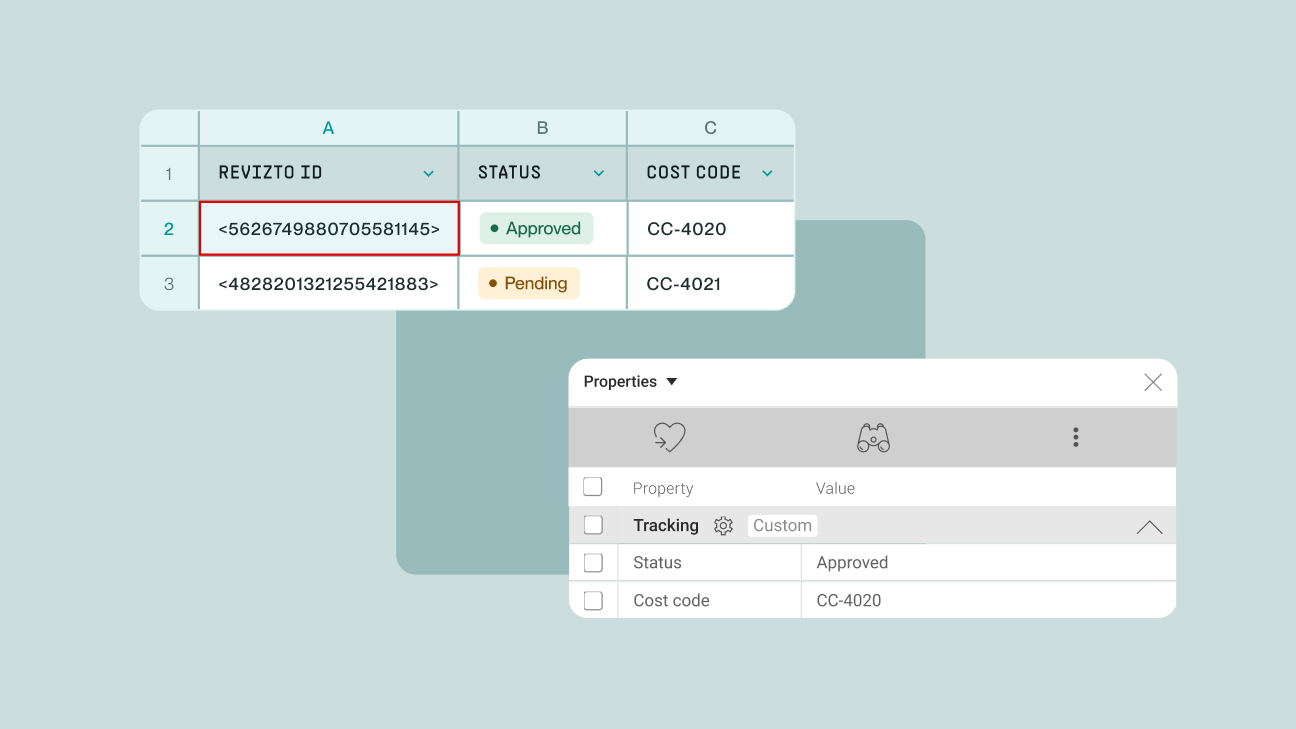
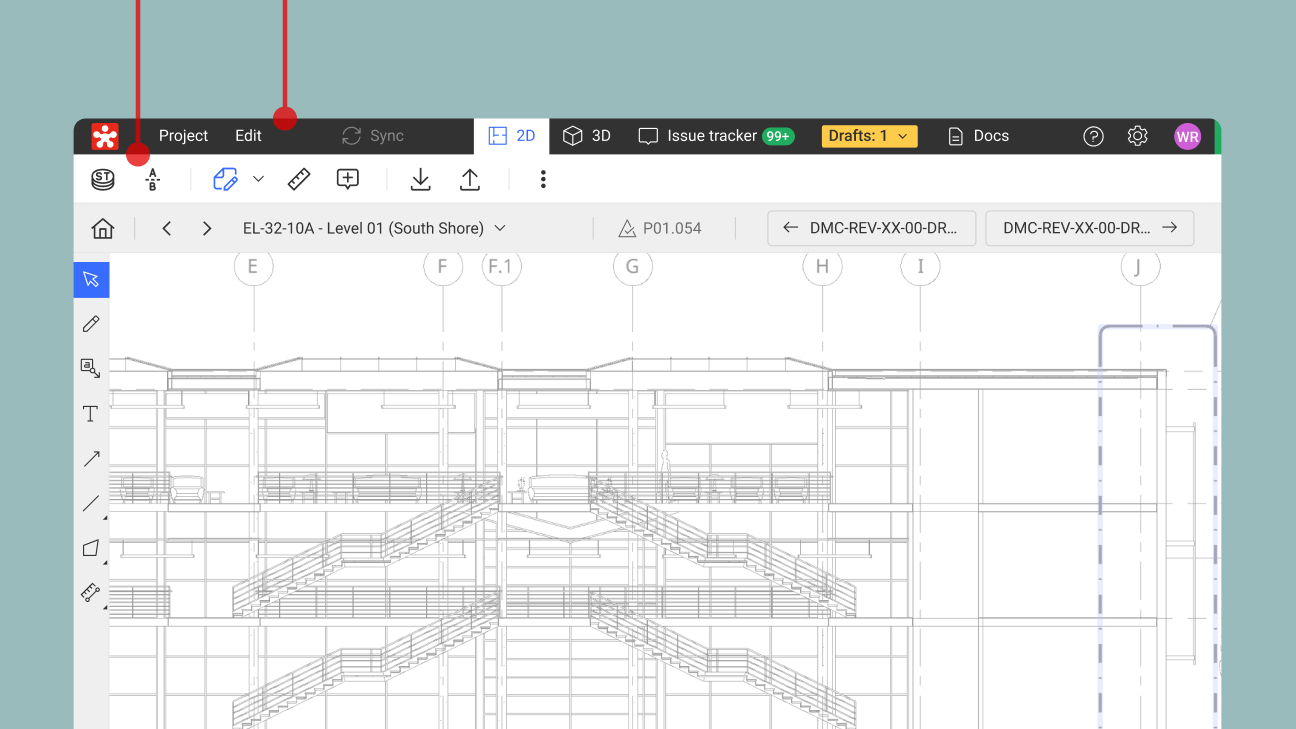
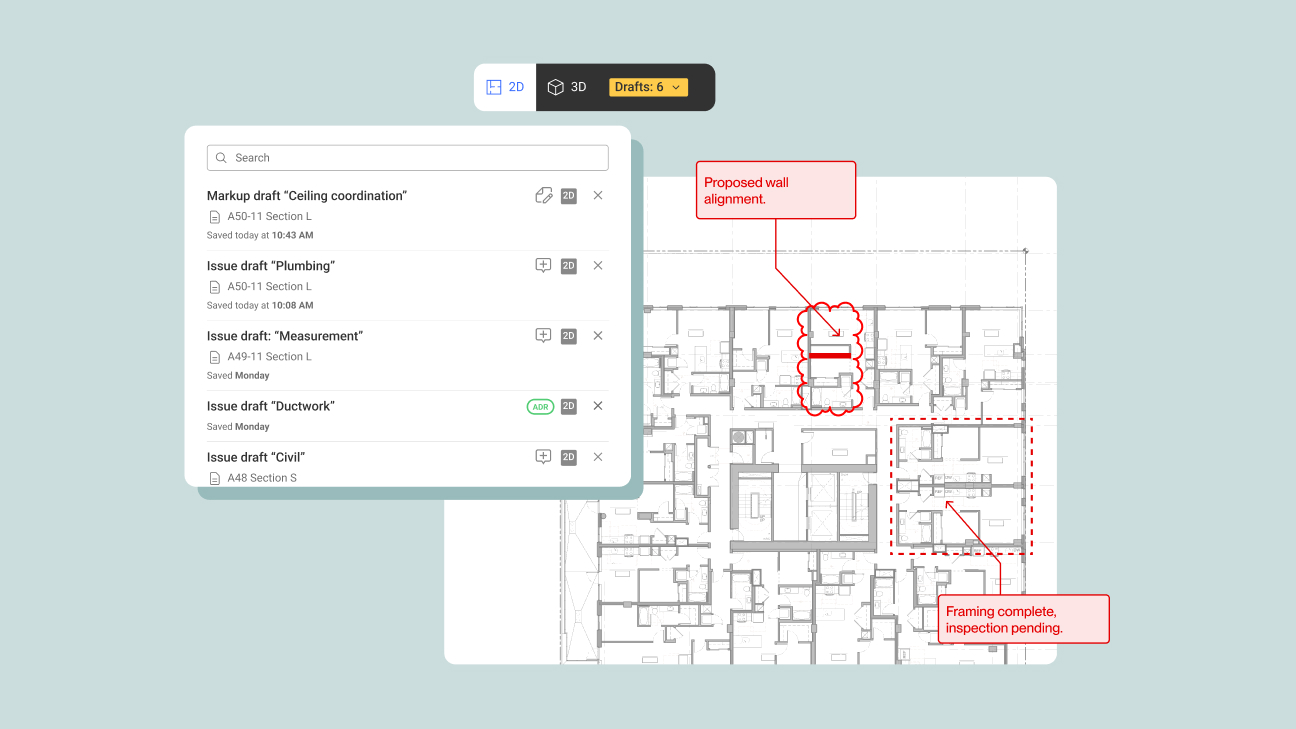
Key features include a built-in issue tracker linked directly to model elements, clash detection, real-time collaboration, 2D sheet integration alongside 3D models, and robust access controls for large project teams. It is particularly well-suited to projects with multiple disciplines and consultants who need to coordinate across different BIM tools.
Revizto is used on large-scale infrastructure and commercial construction projects where coordination across disciplines is critical. Its issue tracker and model navigation work on both desktop and mobile, making it practical for site teams as well as office-based users.
2. Autodesk Viewer
Autodesk Viewer is a free, browser-based tool for viewing 2D and 3D files including RVT, DWG, NWD, and IFC. It requires no installation and is accessible to anyone with an Autodesk account.
The viewer supports basic navigation, section cuts, and element property inspection. It is a lightweight option for quick model reviews and is useful when you need to share a model with someone who has no BIM software installed.
Its limitations are also worth noting: it does not support issue tracking, it lacks collaboration features, and the rendering of large or complex models can be slow. For anything beyond basic viewing, most teams will find it insufficient on its own.
3. BIMcollab Zoom
BIMcollab Zoom is a free IFC viewer with built-in BCF (BIM Collaboration Format) support. It is designed for model coordination and issue management, making it more capable than a basic viewer.
The tool supports IFC files from all major authoring platforms and lets users create, assign, and track BCF issues directly linked to model elements. It works alongside BIMcollab's cloud-based issue management platform, though it can also be used standalone.
BIMcollab Zoom is a good choice for teams that work primarily with IFC and need a free tool with basic coordination capabilities. It does not support RVT files natively.
4. Navisworks Freedom
Navisworks Freedom is Autodesk's free viewer for NWD and NWF files. It allows users to open and navigate Navisworks files without requiring a full Navisworks licence.
The viewer supports 3D navigation and basic model inspection. It is useful when a project team uses Navisworks for coordination and needs to share models with stakeholders who only need to view - not edit - the coordination model.
Navisworks Freedom does not support IFC directly and does not include clash detection or issue tracking. It is a viewing-only tool, with no collaboration or markup capabilities.
5. Solibri Anywhere
Solibri Anywhere is a free, browser-based IFC viewer from Solibri. It is designed for quick model access without installation and supports IFC files from any authoring platform.
The viewer includes basic navigation, element property inspection, and BCF issue support. It is a reasonable option for clients or consultants who need occasional access to IFC models without committing to a full software licence.
Solibri's paid platform (Solibri Office) adds model checking, rules-based validation, and full coordination capabilities, but Solibri Anywhere itself is limited to viewing and basic markup.
6. usBIM.viewer+
usBIM.viewer+ is a free IFC viewer from ACCA software. It supports IFC 2x3 and IFC4 files and includes tools for 3D navigation, property inspection, and basic BCF issue management.
The tool also supports quantity take-off for IFC elements and can produce basic reports from model data. It is a capable free viewer for teams working with open BIM workflows.
usBIM.viewer+ is Windows-only, which limits its use for teams on Mac or needing browser-based access.
7. xBIM Xplorer
xBIM Xplorer is an open-source IFC viewer built on the xBIM toolkit. It supports IFC 2x3 and IFC4 and provides 3D navigation and element property inspection.
As an open-source tool, it is freely available and can be extended or customised by development teams. It is best suited to technical users or organisations that want to build custom BIM viewing capabilities rather than teams looking for a polished, out-of-the-box product.
xBIM Xplorer lacks collaboration features and is not actively maintained with a commercial release cycle, which may be a concern for teams that need a stable, supported product.
8. Trimble Connect
Trimble Connect is a cloud collaboration platform that includes BIM model viewing, coordination, and project management. It supports IFC, RVT (via conversion), SKP, and other formats.
The platform provides model federation, clash detection, issue tracking, and integration with Trimble's construction software ecosystem. It is available as a web application and has desktop and mobile clients.
Trimble Connect offers a free tier with limited storage and project capacity, making it accessible for small teams or individual use. Larger teams require a paid subscription. Its strongest use case is within the Trimble ecosystem, particularly for teams using Tekla Structures or other Trimble design tools.
9. Dalux BIM Viewer
Dalux BIM Viewer is a free mobile and desktop viewer that supports IFC files. It is designed for use on construction sites, with a focus on mobile access and ease of use for non-technical team members.
The viewer includes 3D navigation, 2D drawing integration, and basic issue tracking. The mobile app is well-regarded for site use, where teams need quick access to models and drawings on a tablet or phone.
Dalux offers a broader construction platform beyond the free viewer, including document management and site inspection tools. The free viewer is a good entry point for site teams who need mobile access to IFC models.
10. Tekla BIMsight
Tekla BIMsight was a widely used free BIM viewer and coordination tool. It supported IFC files, model federation, and BCF issue management, and was popular for its accessibility and multi-model handling.
However, Tekla BIMsight has been discontinued and is no longer actively developed or supported. Teams using it are advised to migrate to other platforms. It is included here for historical context, as many teams still reference it, but it should not be considered for new projects.
For teams that valued Tekla BIMsight's approach to multi-model coordination and free access, BIMcollab Zoom or Trimble Connect are reasonable alternatives to evaluate.
Choosing the right BIM viewer
The right BIM viewer depends on your team's workflow, file formats, and collaboration needs. Here are some practical considerations:
- File format support: Confirm the viewer supports the formats your team uses. Not all viewers handle RVT natively - some require IFC export first.
- Collaboration features: Basic viewers are fine for simple model reviews, but teams doing active coordination need issue tracking, BCF support, or integration with a project management platform.
- Mobile and site access: If site teams need to access models, check mobile app quality and offline support.
- Platform compatibility: Some tools are Windows-only. Browser-based tools are more accessible but may have performance limitations on large models.
- Integration with your existing tools: If your team uses Revit, Navisworks, or other Autodesk tools, viewers in that ecosystem reduce friction. Similarly, if you work in an open BIM environment, IFC-first tools may be a better fit.
For teams running large, multi-discipline projects, a full coordination platform like Revizto provides significantly more value than a standalone viewer - combining model access, issue tracking, and collaboration in a single environment.
Free Revit viewer options
If your specific need is a free Revit file viewer - a tool to open RVT files without Revit - the options are narrower than for IFC. Autodesk Viewer is the most accessible option, as it handles RVT files in the browser. Revizto also supports RVT files natively via its publishing workflow.
Most other BIM viewers require IFC export from Revit before the model can be opened. This is not always a significant barrier, but it adds a step to the workflow and may result in some data loss depending on how the IFC export is configured.
Online IFC viewer options
For browser-based IFC viewing without installation, the main options are Autodesk Viewer, Solibri Anywhere, and usBIM.viewer+ (web version). These tools are useful for sharing models with clients or stakeholders who need occasional access.
Performance on large IFC files varies across browser-based tools. If you regularly work with large, complex models, a desktop application will generally provide a better experience.
Conclusion
BIM viewers range from simple, free tools for occasional model access to full coordination platforms for large project teams. The right choice depends on your file formats, collaboration needs, and whether your team needs mobile or site access.
For teams doing active multi-discipline coordination, a platform like Revizto - which combines model viewing, issue tracking, and collaboration - provides more value than a standalone viewer. For lighter use cases, free tools like Autodesk Viewer, BIMcollab Zoom, or Dalux BIM Viewer cover the basics without cost.
If you're evaluating options for your team, Revizto offers a trial that lets you assess whether it fits your coordination workflow - that's often the most direct way to determine whether a platform meets your specific project needs. Request a demo or start a trial to see it in action. Requesting a demo is the first step towards understanding whether this specific solution fits your company's needs or not.
FAQs
The best Revit viewer depends on what you need it for. For simple RVT file viewing without Autodesk tools, Autodesk Viewer (browser-based, free) and BIMcollab ZOOM are popular options. For teams that need to do more than view - tracking issues, coordinating across disciplines, and connecting field teams to the model - Revizto is widely used because it combines viewing with active project coordination. If your main need is IFC file viewing, Open IFC Viewer and Solibri Anywhere are strong free options.
The most important factors depend on how your team actually uses models. If you need basic viewing only, a free browser-based tool like Autodesk Viewer or Open IFC Viewer will do the job. If your team includes non-technical users or field staff, look for something with a simple interface and mobile support - Dalux and Fieldwire are designed with site teams in mind. For cross-discipline coordination and issue tracking on top of viewing, platforms like Revizto, BIMcollab ZOOM, and Trimble Connect go further. Also check file format support: most viewers handle IFC well, but RVT support varies. And if offline access matters for site use, confirm the tool works without a connection.
For free IFC viewing, Open IFC Viewer and Solibri Anywhere are both well-regarded - Solibri in particular is known for model quality checking beyond basic viewing. BIMcollab ZOOM handles IFC well and integrates with issue tracking. For project teams that need IFC viewing alongside coordination workflows, Revizto and Trimble Connect both support IFC and offer more collaborative features. The right choice depends on whether you need pure viewing or active coordination around the model.
Yes. Autodesk Viewer is free and browser-based - you upload the RVT file and view it without installing anything. BIMcollab ZOOM has a free tier with IFC and some RVT support. Navisworks Freedom is a free desktop app that views NWD and NWC files (Revit exports). Most paid platforms including Revizto also offer trial access. For teams that need more than viewing - issue tracking, markups, field access - the free tiers of coordination platforms are worth exploring before committing to a paid tool.
Yes. Several BIM viewers work entirely in the browser. Autodesk Viewer handles RVT, IFC, and other formats with no installation needed. Trimble Connect and BIMcollab ZOOM both have browser-based viewing. Revizto also offers a web viewer alongside its desktop and mobile apps. The main trade-off with browser-based viewers is performance on very large models - for complex federated models with multiple disciplines, a desktop client typically handles navigation and measurement more smoothly.
A BIM viewer lets you open and navigate a model - zoom, section, measure, and inspect elements. BIM coordination software does all of that and adds workflows on top: issue tracking, clash detection, task assignment, RFI management, and integration with construction schedules. Tools like Navisworks, Solibri, and Revizto are in the coordination category. If your team needs to do more than look at the model - if you need to act on what you find and track resolution - a coordination platform will serve you better than a viewer alone.