
Te Rua Archives: Building one of the world’s most earthquake-resistant facilities
Project overview
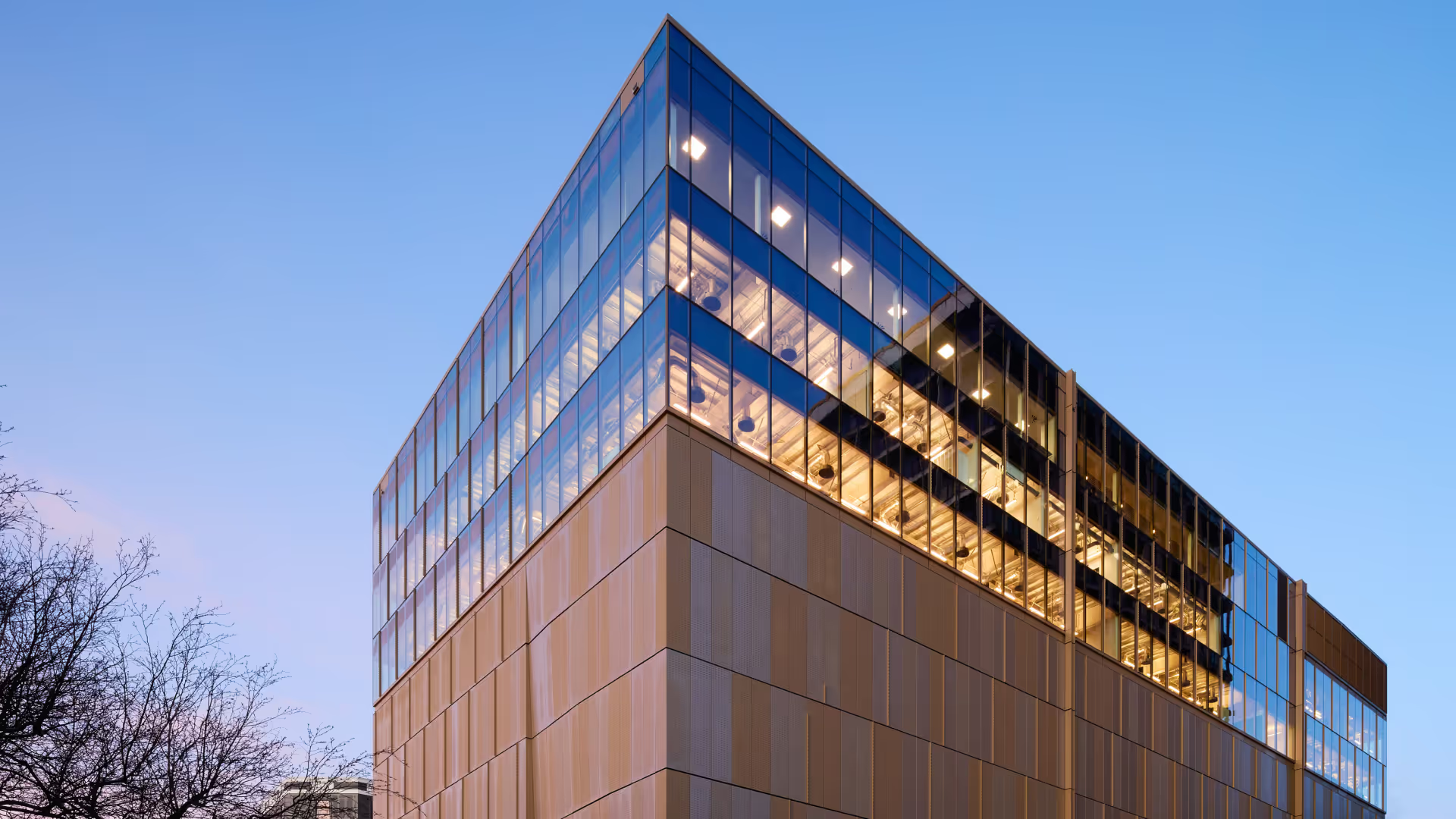
Te Rua Archives New Zealand was delivered by Dexus in partnership with The Department of Internal Affairs, with project management by RCP, design led by Warren and Mahoney and Aurecon, and construction by LT McGuinness.
Protecting a nation’s history in a major earthquake zone
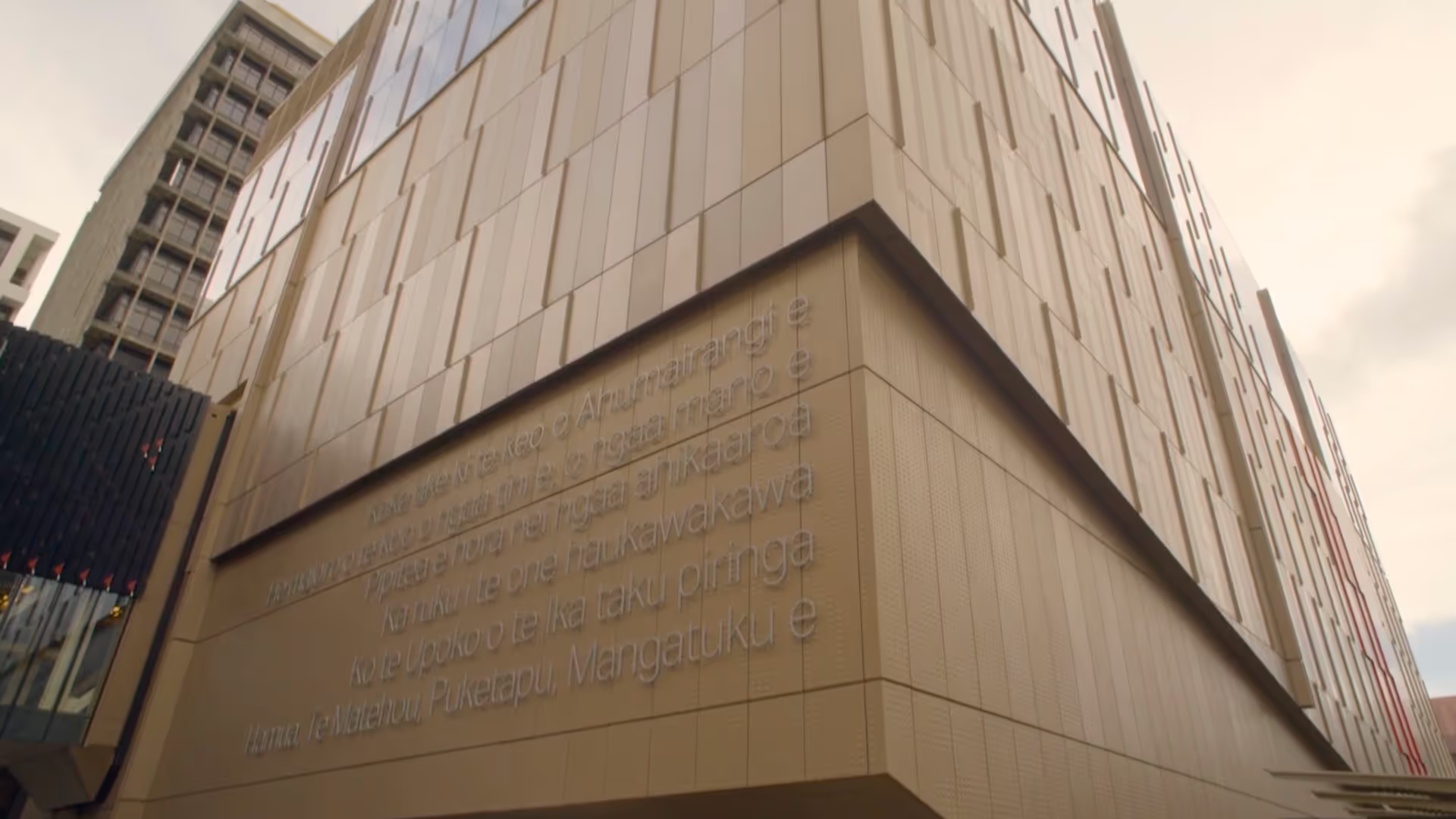
Te Rua Archives is New Zealand’s purpose-built national archive facility. Co-designed with Māori communities, it protects the country’s most important documents, including the Treaty of Waitangi, the Women’s Suffrage Petition, and the Declaration of Independence.
Located just 450 meters from the Wellington Fault, the building is recognized as the most seismically resilient civic building in the Southern Hemisphere. It is engineered to remain operational after a 1-in-1800-year earthquake, with systems designed to return to operation within 24 hours of a major quake.
Although ten stories tall, the building carries the mass of a 30-story tower. Five floors of archival storage hold more than 88,000 meters of mobile shelving supported by over 5,000 tonnes of steel. The structure sits on 38 triple-pendulum base isolators, allowing the building to move up to 1.35 meters horizontally and 350 millimeters vertically during earthquake activity.
Environmental control is just as critical as structural resilience. Archive floors must maintain tightly controlled temperature and humidity conditions to preserve irreplaceable documents. No water services are allowed through key archive levels, and fire protection systems remain dry until activated. The 4,000m² facade achieves up to three times the airtightness of leading archive facilities and can maintain internal conditions within ±1°C for up to 48 hours during a power outage.
Delivered during COVID-19 and global supply disruption, the NZ$290 million project was completed on time and on budget. Achieving this level of precision required coordination across all disciplines to tolerances as tight as 10-20 millimeters.
Using Revizto to coordinate complexity with precision
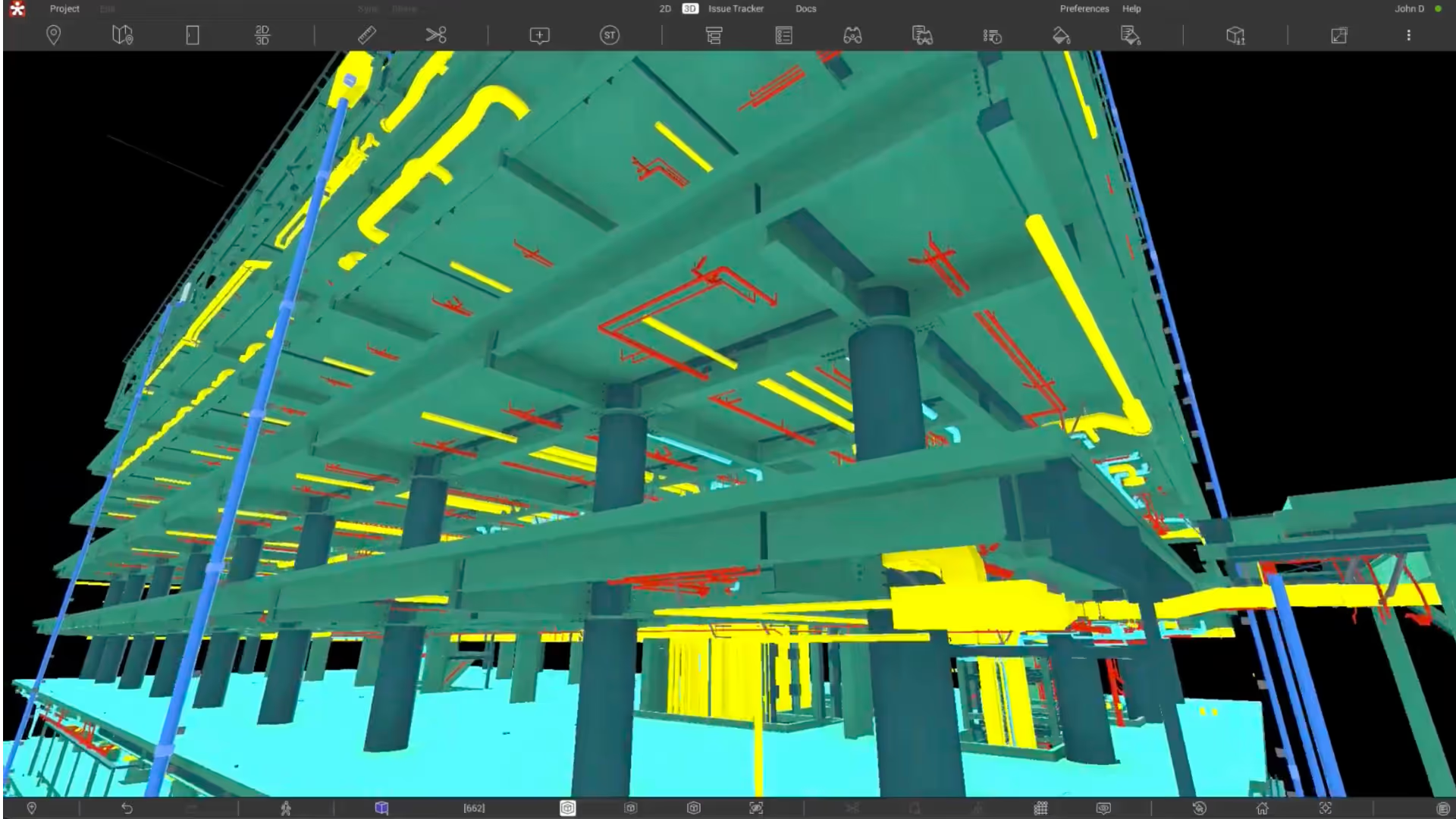
Te Rua Archives followed a model-first delivery approach. From early design through construction, a federated 3D model acted as the project’s single source of truth, bringing every discipline into one shared environment.
With everyone working from the same live model, teams could clearly see how structural systems, services, and preservation requirements interacted before work began onsite. Drawings were reviewed directly against the model, helping teams identify discrepancies early and coordinate systems to millimeter-level accuracy.
Clash detection, which had previously taken weeks, was reduced to hours. Thousands of coordination issues were resolved digitally before installation began. During construction, the model was updated nightly so teams always worked from the latest information.
“A 40-hour process that we were typically doing is now down to a four-hour process’’
Anton Shaw, Senior Associate
Warren and Mahoney
Onsite, data stations and iPads replaced printed drawings, giving installers direct access to the digital twin. During construction, augmented reality helped teams check complex seismic joints and building services before installation, preventing costly mistakes.
“We just wouldn’t have achieved that level of detail without using Revizto for model delivery.”
Tessa Beetham, Technical Director
Aurecon
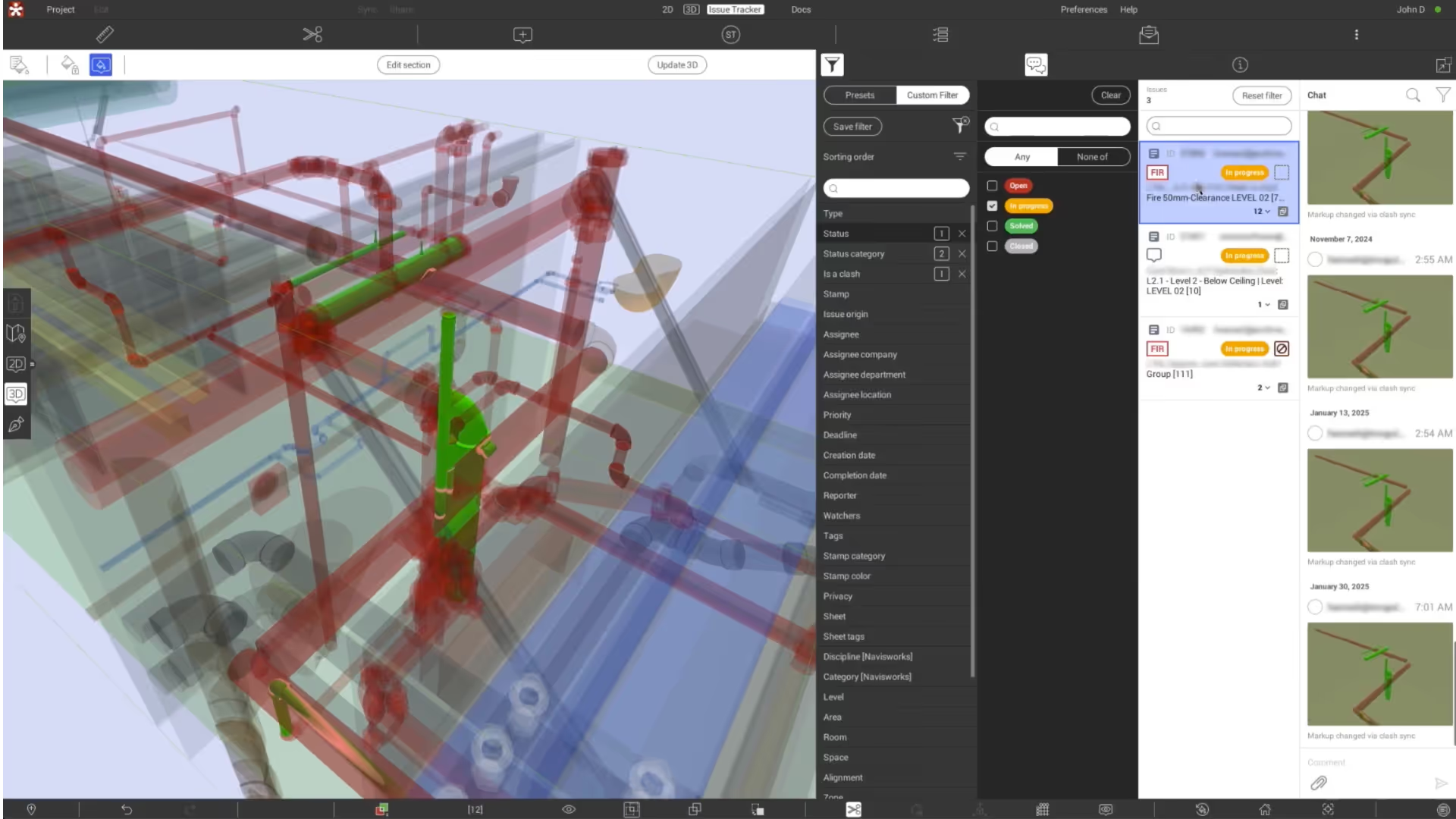
Using Revizto for complex coordination reduced RFIs, minimized rework, and gave teams greater confidence across the entire project. The digital twin has now been handed over for ongoing asset management, providing a reliable foundation for maintenance and future adaptation.
“I’m not sure how we would have coordinated the design and delivery process as effectively without Revizto.”
Melissa Thompson, Senior Associate
Warren and Mahoney
How Revizto Collaboration Hub enabled success
- Unified 2D/3D Environment - Connected all disciplines in one live model. Teams used 2D Overlay to compare drawings with the 3D model and resolve discrepancies before construction began.
- Collaborative Clash Automation - Reduced coordination time from weeks to hours and helped teams resolve thousands of clashes digitally, including complex seismic joints and service routing.
- Integrated Issue Management - Linked issues directly to exact locations in the model. This improved accountability, reduced RFIs, and minimized rework across teams.
- Connected Project Intelligence - Provided real-time visibility into coordination progress through shared dashboards and model data, helping teams track issues and make faster decisions.
- Best-In-Class Data Security & Sovereignty - Centralized access to the federated model so every stakeholder worked from the same secure collaboration hub.