Comment les équipes AECO repensent le fossé des compétences
Intégrez Revizto à votre flux de travail
Le secteur de la construction est confronté à une pénurie de talents, et ce, depuis des années. Mais selon les conclusions de notre rapport 2026 Bridging the Gap, la manière dont le secteur y réagit pourrait être en train de changer.
Lorsque nous avons interrogé 2 006 professionnels de l'AEC et demandé ce que leurs organisations faisaient pour combler le manque de talents et de compétences, la réponse numéro un n'était pas le recrutement. Il s'agissait de simplifier les outils et les flux de travail pour réduire la charge de formation des équipes.
C'est une évolution majeure des mentalités. Cela indique que le secteur a commencé à accepter qu'il ne peut pas résoudre un problème structurel par le seul recrutement. Il doit s'en sortir en s'appuyant sur ses propres ressources, en investissant dans les personnes qu'il a déjà.
Le plus grand obstacle n'est pas la technologie
Francesca Lofiego est la Directrice numérique chez StructureTone UK, une entreprise leader dans l'aménagement intérieur qui est passée d'environ 100 à plus de 400 employés en moins d'un an. Elle a créé la première fonction BIM de l'entreprise à partir de zéro, et le défi qu'elle décrit sera familier à quiconque a tenté de promouvoir l'adoption numérique au sein d'une équipe de projet.
« Le principal obstacle dans la construction n'est pas vraiment de trouver la meilleure technologie, mais de convaincre les gens d'adopter une approche différente de celle qu'ils ont suivie ces dernières années. »
Francesca Lofiego, Directrice numérique, StructureTone UK
La mise en œuvre du BIM, ou de toute plateforme de coordination numérique, est rarement un problème de logiciel. C'est un problème humain. Tirer pleinement parti de la coordination 3D exige que toute l'équipe de projet travaille dans un environnement numérique partagé, et pas seulement les spécialistes BIM. Les chefs de projet de construction, les responsables de la conception et les responsables des services techniques doivent tous adhérer.
Pour Francesca, la récompense est venue en voyant ce changement s'opérer. Voir des équipes de projet qui avaient auparavant résisté aux nouveaux flux de travail commencer à les adopter était, dit-elle, l'une des parties les plus gratifiantes de la mise en place de cette fonction. Ce changement ne se produit pas par hasard. Il se produit parce que quelqu'un s'y est investi.
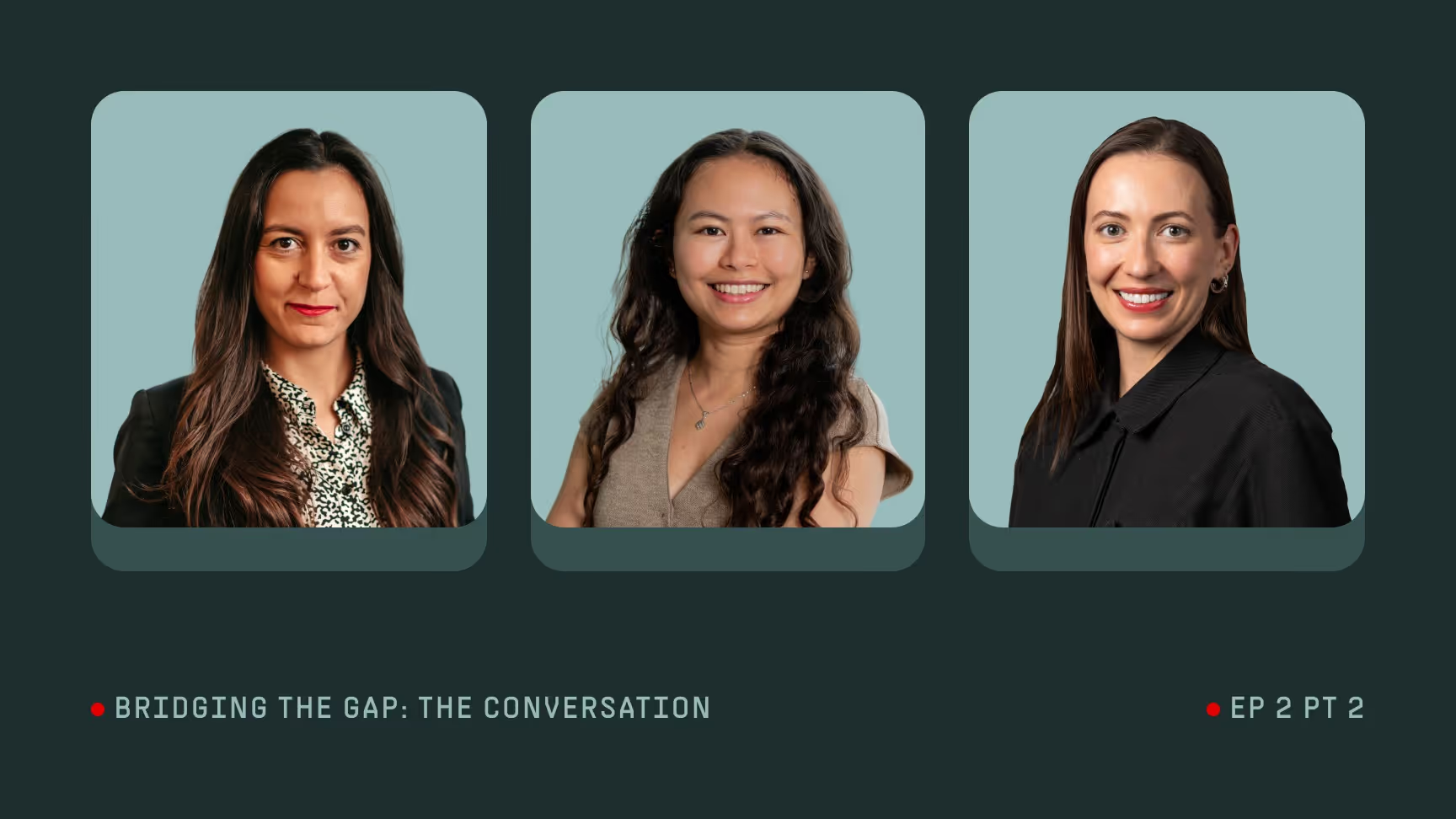
Regarder le webinaire ici.
Envisagez des candidats issus de secteurs connexes
Quand il a fallu constituer son équipe, Francesca a appliqué la même philosophie au recrutement. Seim Lei Yati, sa première recrue et maintenant coordinatrice de construction numérique chez StructureTone, venait d'un milieu architectural sans expérience BIM préalable dans un contexte d'entreprise générale. Ce n'était pas un critère éliminatoire.
Ce que Francesca a vu lors du processus d'entretien était une candidate qui abordait un dossier de manière approfondie, réfléchissait aux problèmes de manière méthodique et faisait preuve d'un état d'esprit propice à l'évolution dans ce poste.
Je peux vous apprendre à utiliser le logiciel. Ce qui m'intéresse le plus, c'est l'approche que les gens adoptent dans leur travail, leur façon de voir les choses, comment ils réfléchissent à la résolution des problèmes, plutôt que les aspects techniques.
Francesca Lofiego, Responsable numérique, StructureTone UK
Elle a également souligné que la culture des données est une compétence de plus en plus essentielle et sous-estimée. Les clients posent des questions sur les jumeaux numériques et les données d'actifs sans toujours comprendre ce qu'ils demandent. Les professionnels capables de combler ce fossé, en traduisant les besoins des clients à partir des données en quelque chose d'actionnable, se démarqueront.
Pour les responsables du recrutement qui peinent à trouver des candidats avec des qualifications BIM solides, le conseil de Francesca est clair : investissez dans le potentiel. Recherchez des personnes capables de résoudre des problèmes. Envisagez des candidats issus d'industries adjacentes, car la diversité de pensée renforce les équipes d'une manière que l'expérience technique seule ne peut pas faire.
De l'architecture au BIM
Pour Seim, l'accès à son premier poste dans la construction numérique a signifié abandonner certaines idées reçues profondément ancrées sur ce qu'est réellement le BIM.
« Quand quelqu'un dit BIM, on a tendance à penser que tout tourne autour du logiciel, qu'on reste assis dans sa pièce à faire les modèles. Mais c'est loin de la vérité. On est très impliqué dans le projet. Il s'agit avant tout de communication, de gestion des attentes, de flux de travail, et il faut parler le langage de chacun. »
Seim Lei Yati, Coordinatrice de la construction numérique, StructureTone UK
Venant de l'architecture, Seim était habituée à une méthode de travail axée sur la conception et largement autonome. Le BIM dans la construction est presque l'inverse. Le rôle exige une communication transversale entre les sous-traitants, les consultants et les équipes de chantier. Il exige de renoncer à la propriété individuelle au profit de la responsabilité collective.
Ce changement a été un défi, mais aussi une expérience vraiment agréable. Les compétences que Seim a développées en architecture étaient transférables. La pensée spatiale, l'attention aux détails et la compréhension de la manière dont la conception se traduit en réalité construite se sont toutes transposées. Ce qu'elle a dû développer de zéro, c'est la fluidité collaborative, la capacité à gérer les attentes et à coordonner les différentes disciplines simultanément.

Conseils pour ceux qui cherchent un emploi dans l'AECO
Francesca et Seim convergent toutes deux sur le même point en matière de conseils pratiques : cessez de considérer les compétences techniques comme le filtre principal.
« Soyez prêt à apprendre. Vous aurez toujours quelque chose que vous ne savez pas, soyez simplement prêt à cela. Faites partie de l'équipe, faites partie du projet. Et enfin, soyez curieux. Cela vous aidera vraiment dans votre rôle et pour progresser. »
Seim Lei Yati, Coordinatrice de la construction numérique, StructureTone UK
Les compétences qui définissent le succès dans les postes de construction numérique – l'ouverture d'esprit, la communication, la flexibilité, la curiosité et la capacité à gérer les attentes à travers de multiples disciplines – ne sont pas des compétences logicielles. Ce sont des compétences humaines. Et elles sont apprenables.
C'est là que la formation structurée et l'apprentissage continu deviennent essentiels, à la fois pour les individus qui cherchent à faire le pas et pour les équipes qui essaient de développer leurs capacités numériques en interne.
L'Académie Revizto
Que vous soyez un particulier souhaitant acquérir des compétences en coordination BIM pour la première fois, ou un chef d'équipe cherchant à familiariser son équipe de projet avec une nouvelle plateforme, l' Revizto Academy propose des parcours d'apprentissage structurés conçus autour de flux de travail de construction réels.
Pour les équipes qui développent des fonctions numériques, et pour les professionnels qui envisagent leur prochaine étape, acquérir les bonnes habitudes et les connaissances dès le début accélère chaque étape ultérieure.
FAQ
La maîtrise des logiciels techniques est un atout précieux, mais ce n'est pas le facteur le plus important. La communication, la collaboration, l'ouverture d'esprit, la culture des données et la capacité à gérer des flux de travail multidisciplinaires sont régulièrement citées comme les compétences clés du succès dans les rôles BIM et de construction numérique. De nombreux professionnels réussissent leur transition depuis des parcours en architecture, ingénierie ou topographie.
Les entreprises se concentrent de plus en plus sur le perfectionnement de leur personnel existant plutôt que de s'appuyer uniquement sur de nouvelles embauches. Cela implique de simplifier l'adoption des technologies, d'investir dans des programmes de formation structurés et de recruter en fonction du potentiel et de l'état d'esprit plutôt que des seules qualifications. Des plateformes comme Revizto Academy proposent des parcours d'apprentissage conçus autour de flux de travail réels du secteur de la construction pour soutenir à la fois les individus et les équipes.
Oui. De nombreux professionnels du BIM qui réussissent sont issus de rôles connexes dans l'architecture, l'ingénierie ou la topographie. Des compétences transversales telles que la pensée conceptuelle, la conscience spatiale et la coordination de projet constituent une base solide. Les employeurs du secteur de la construction numérique recrutent de plus en plus en fonction de l'approche et de l'attitude, les compétences logicielles étant développées sur le terrain ou par le biais de formations structurées.