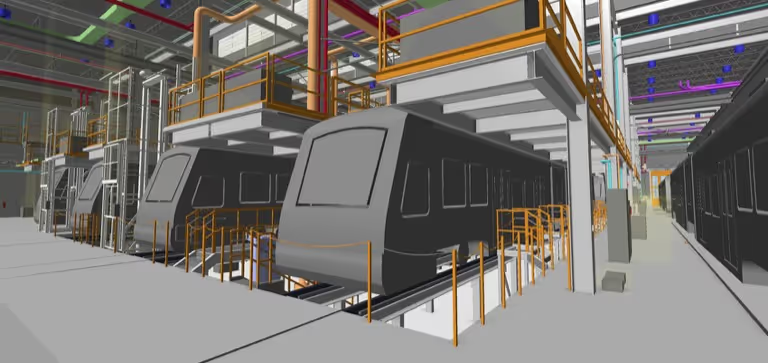
5 biggest coordination risks in rail infrastructure projects
See how Revizto fits your workflow
Rail infrastructure projects are among the most complex forms of construction delivery. Unlike vertical buildings or even other civil assets, rail corridors span vast geographies, intersect with existing networks, and operate within strict safety, regulatory and operational constraints.
As a result, BIM for rail projects requires more than traditional coordination workflows. Rail delivery demands infrastructure-grade collaboration, high-performance model environments and structured issue governance across multi-disciplinary teams.
Understanding the most common coordination challenges in railway projects is the first step toward delivering with greater certainty.
Why rail projects demand specialised BIM workflows
Rail projects differ from other infrastructure in several critical ways:
- They are corridor-based and geographically distributed
- They involve complex interfaces (track, signalling, civils, structures, utilities)
- They often operate alongside live transport networks
- They require long-term lifecycle data continuity
Standard building-focused BIM tools were not designed for this scale of coordination. Effective rail infrastructure BIM must support multi-package federation, structured issue tracking and seamless collaboration between office and field.
1. Corridor-scale model complexity
Rail projects typically span kilometres — sometimes hundreds of kilometres — across varying terrain, urban environments and existing infrastructure.
Managing federated models across such large corridors presents unique challenges:
- Extremely large file sizes
- Multiple design packages delivered in parallel
- Alignment coordination across disciplines
Interface points between track, stations, bridges and utilities
2. Multi-disciplinary interface management
Rail projects bring together a broad range of disciplines:
- Civil and structural engineering
- Track and alignment design
- Signalling systems
- Utilities and drainage
- Environmental and geotechnical specialists
Contractors and subcontractors
The coordination matrix is far more complex than most building projects.
Interfaces between track and signalling, bridges and embankments, stations and utilities create constant clash risk. Without structured issue tracking and clear ownership, coordination breakdown becomes inevitable.
A dedicated rail infrastructure collaboration platform must support cross-discipline issue management with transparent accountability and real-time visibility.
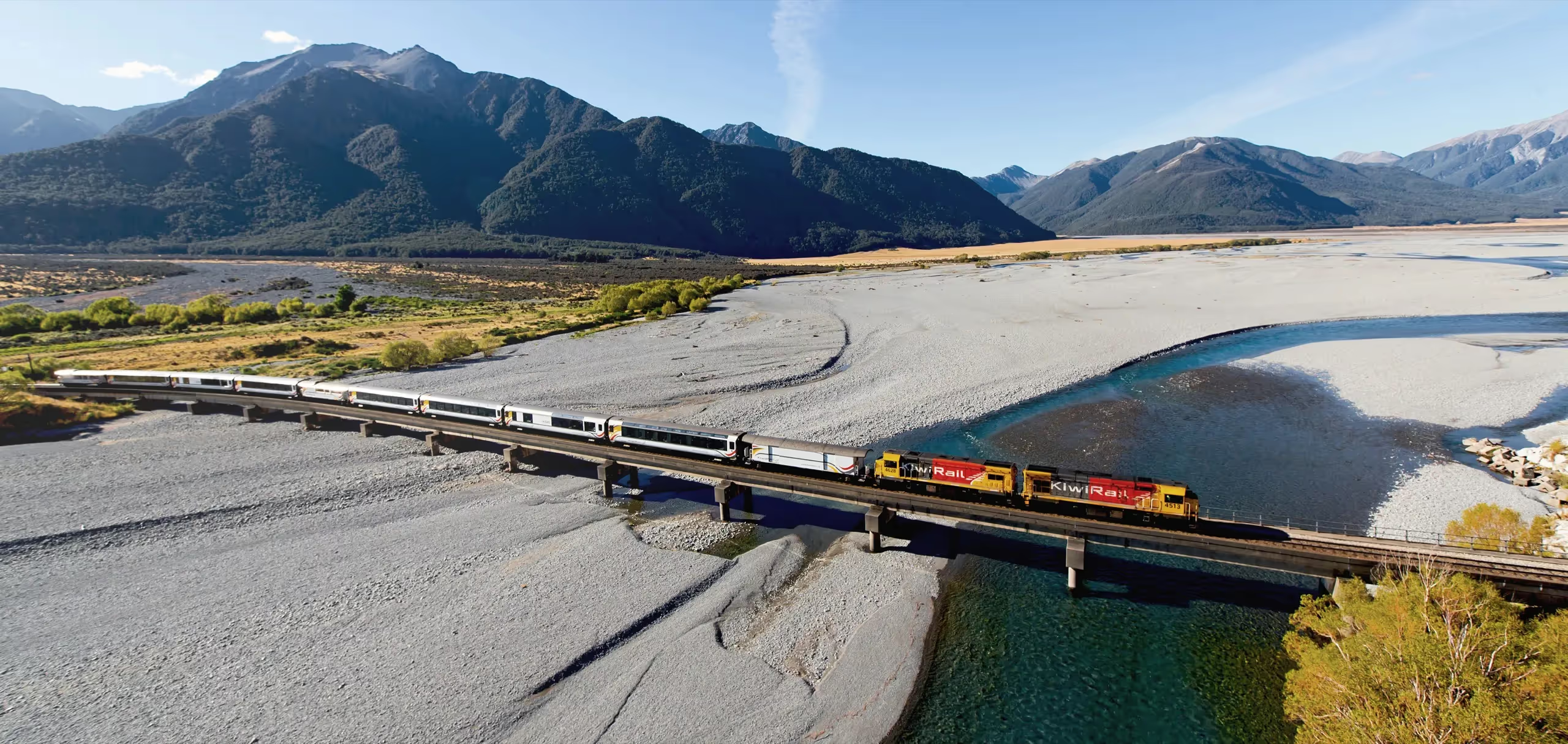
3. Integration of BIM, GIS and existing condition data
Unlike building projects, rail infrastructure must integrate multiple data types:
- BIM models
- GIS data
- Terrain and topographical surveys
- Point clouds
- Drone photogrammetry
- Underground utilities
When these data sources remain siloed, coordination decisions are made without full context. This increases risk across corridor projects where unseen conditions can significantly impact programme and cost.
Modern rail construction software must unify BIM and GIS into a single collaborative environment, allowing teams to visualise infrastructure assets in geographic context.
4. Staged delivery and live network constraints
Rail projects are rarely delivered in a single continuous phase. They often include:
- Early works packages
- Temporary diversions
- Staged commissioning
- Night or weekend possessions
- Coordination with live operational rail networks
These constraints introduce coordination pressure across timelines. Delays or miscommunication can affect not just construction progress but operational safety.
BIM for railway projects must support stage-based visibility, traceability of decisions and structured communication between design and construction teams.
Lifecycle continuity is critical — particularly for publicly funded rail infrastructure that must remain operational for decades.
5. Field-to-office coordination across distributed sites
Rail delivery environments are dynamic and geographically dispersed. Teams may operate:
- Across remote corridors
- Within urban transport hubs
- Along active track environments
When field teams cannot easily access coordinated model information, issue resolution slows. Email threads and static drawings reintroduce risk into digitally managed environments.
A purpose-built civil infrastructure collaboration platform connects field and office within a shared model environment. Issues raised onsite can be assigned, tracked and resolved directly within the federated rail model — reducing rework and improving accountability.
In rail projects, collaboration speed directly impacts safety, cost and programme certainty.
What to look for in BIM software for rail projects
Not all BIM platforms are built for rail coordination complexity. When evaluating rail BIM software, consider whether it can:
- Handle large federated corridor models
- Integrate BIM and GIS seamlessly
- Provide structured issue tracking across packages
- Support stage-based delivery workflows
- Enable real-time field collaboration
- Maintain performance at scale
The real question is not whether a tool can view a railway model — but whether it can sustain coordination across a multi-kilometre, multi-stakeholder rail programme.