Revizto vs. Navisworks vs. ACC: Which solution best uses clash data for future planning?
See how Revizto fits your workflow
In modern construction, a "clash" shouldn't just be a problem you fix and forget. It is a valuable data point. As Jason Howden, Chief Innovation Officer at Revizto, points out:
"If you aren't using the data from your last project to plan your next one, you're just making the same expensive mistakes in a different building."
To stop the cycle of rework, firms are looking for tools that transform coordination hurdles into "lessons learned." However, as projects become more data-reliant, construction data security and clear data ownership in construction have become critical hurdles.
Below, we compare the three heavy hitters in the BIM space to see which one actually helps you plan for the future.
1. Autodesk Navisworks: The technical workhorse
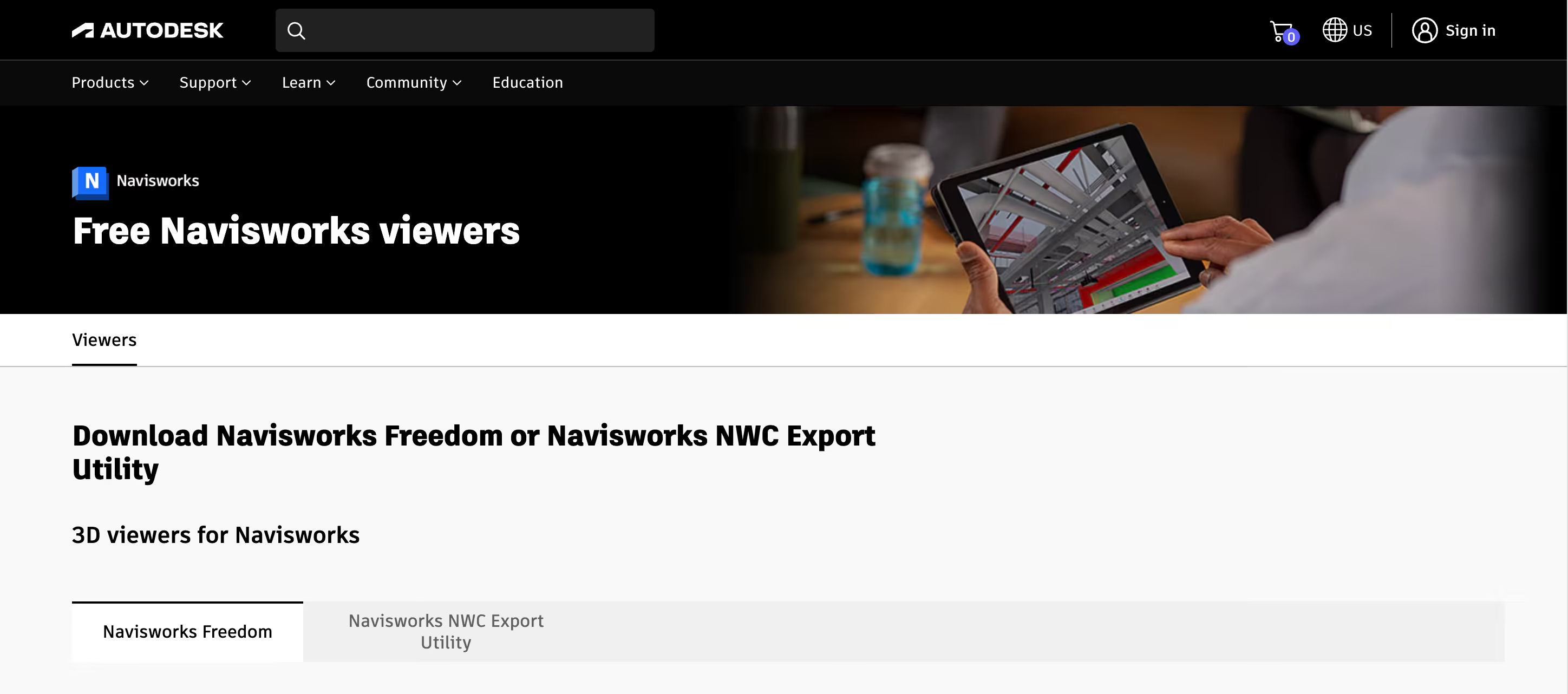
Navisworks has been the industry standard for "hard" clash detection for decades. It is a powerful calculator, but it often struggles with data longevity.
- The workflow: High-level BIM coordinators run "Clash Detective" to find geometric intersections.
- The data gap: Navisworks is primarily file-based. Once a clash is resolved and the file is updated, that "history" often disappears or is buried in a static PDF report.
- Future planning: While you can save "Clash Test" templates for the next project, the human context (the "why" behind a resolution) is rarely captured in a way that informs future schedules.
2. Autodesk Construction Cloud (ACC): The ecosystem approach

ACC attempts to solve the data silo problem by moving coordination into a Common Data Environment (CDE).
- The workflow: Using the Model Coordination module, users can view automated clashes in the cloud.
- The data advantage: Through the Data Connector, firms can export issue data into Power BI. This allows executive-level dashboards to track which teams are causing the most delays.
- Future planning: ACC is excellent for "digital control towers," helping firms see enterprise-wide trends. However, the disconnect between the technical clash and the management "issue" can still lead to data loss during the heat of coordination.
3. Revizto: Unified issue tracking and coordination
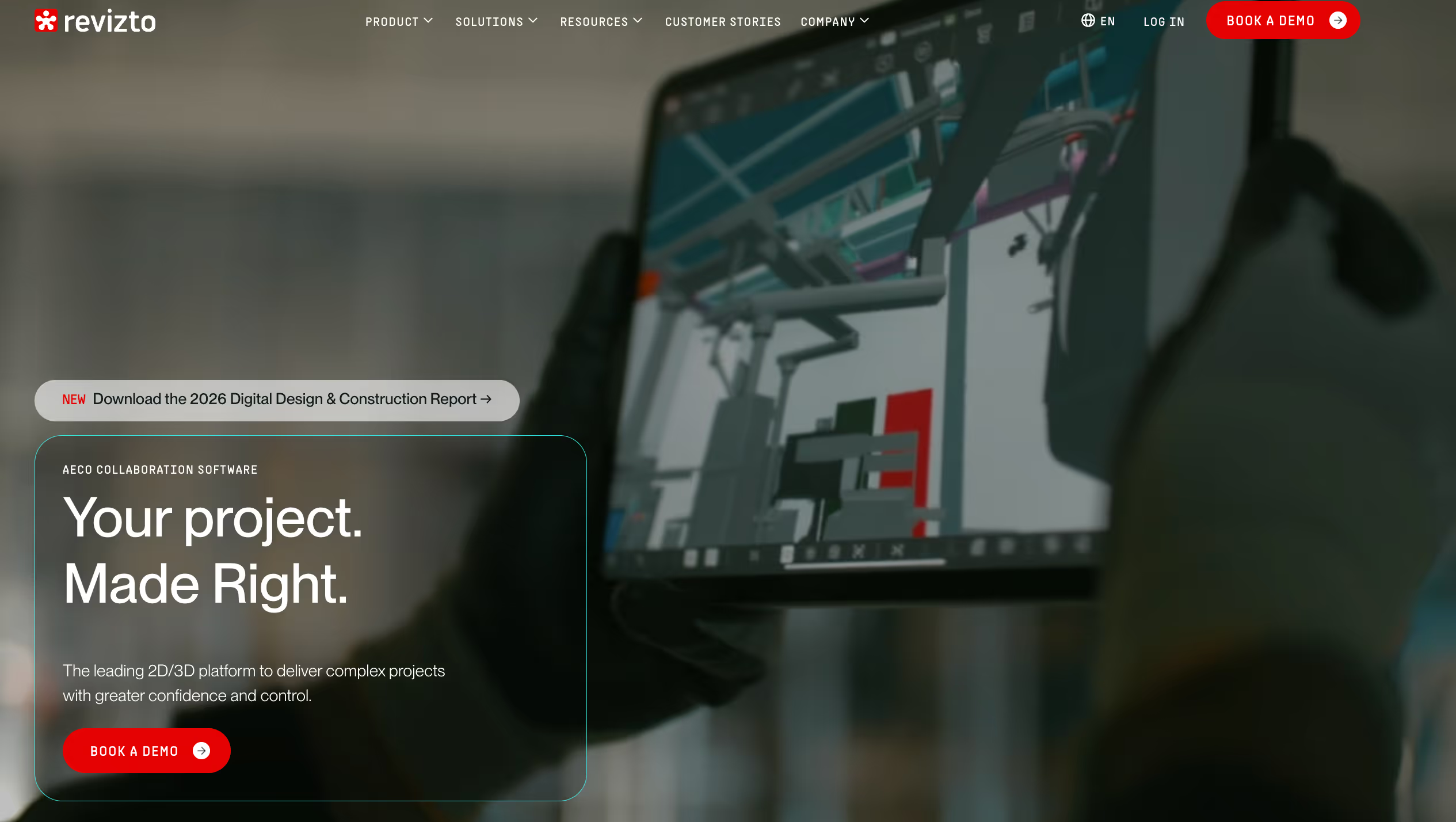
Revizto approaches coordination by treating every clash as a managed "issue" from the moment it is detected. This shift moves the focus from individual files to a continuous project stream, making it a truly secure BIM collaboration platform.
- The workflow: Revizto creates a unified environment where every clash is automatically an "issue" with a permanent, searchable trail.
- The data advantage: It captures the full conversation, screenshots, and markups.
"The magic of Revizto is that it takes complex bim data and puts it into a format that everyone, from the architect to the site foreman can actually use and understand."
Jason Howden, Chief Innovation Officer, Revizto
- Security & governance: Revizto addresses modern BIM cybersecurity concerns by ensuring that sensitive project data is encrypted and accessible only to authorized stakeholders. By maintaining a clear audit trail of who changed what and when, it simplifies construction software security audits and clarifies BIM data security protocols.
- Future planning: Because the platform’s data is so accessible, it becomes a "living library." Planners can audit the issue history of previous projects to identify recurring risks and set more realistic timelines.
Reactive firefighting to predictable project delivery
Most project managers suffer from a "rework loop". The same design oversights appearing project after project because the knowledge gained during coordination never leaves the BIM coordinator’s workstation. Revizto bridges this gap by turning coordination into a source of truth for the entire organization.
"Efficiency in AEC isn't just about finding clashes; it's about the speed of communication and the clarity of the resolution."
Jason Howden, Chief Innovation Officer, Revizto
By using Revizto, your team isn't just fixing a pipe; they are documenting a methodology. When you start your next project, you aren't guessing how long coordination will take—you are looking at hard data from your last five Revizto projects to build a schedule that actually works.
Things to know for your next project kickoff:
- Standardized clash templates: Use automation to check for the same recurring mistakes that plagued previous jobs.
- Predictive risk modeling: Use past resolution speeds to forecast realistic deadlines for complex zones.
- Institutional knowledge: New hires can review past project issues to understand company standards in days, not months.
FAQs
Clash detection in Building Information Modeling (BIM) is the process of identifying conflicts between different building systems—such as structural, mechanical, electrical, and plumbing components—before construction begins. Tools like Navisworks, Autodesk Construction Cloud (ACC), and Revizto help teams detect these issues digitally so they can resolve them before they become costly on-site problems.
Clash detection identifies geometric conflicts between elements in a model. Issue tracking manages the process of resolving those conflicts. Platforms like Revizto automatically convert clashes into issues with assigned responsibilities, comments, screenshots, and resolution history, making coordination easier for project teams.
Navisworks has long been the industry standard for rule-based clash detection and detailed geometric analysis. Autodesk Construction Cloud (ACC) brings clash detection into a cloud-based ecosystem, allowing teams to run automated checks and connect coordination data with broader project management workflows.
Revizto, however, goes beyond simply detecting clashes. It transforms clashes into actionable issues within a collaborative environment, allowing teams to assign responsibility, communicate directly within the model, and track every decision from discovery to resolution.
Yes. if the platform preserves clash history and resolution data. Tools that maintain searchable issue histories allow teams to analyze patterns, identify recurring coordination problems, and improve planning for future projects. Revizto, for example, stores issue conversations, markups, and decisions so teams can review lessons learned across projects.
Modern BIM collaboration platforms use encrypted cloud environments and access controls to protect project data. Revizto and Autodesk Construction Cloud both implement enterprise-grade security measures, including permission-based access, audit logs, and secure cloud storage to protect sensitive project information.