DBIA’s Brian Skripac on bridging the 2D-to-3D gap and building digital trust
Client overview
The Design-Build Institute of America (DBIA) is the only organization in the nation that defines, teaches, and promotes best practices in design-build project delivery. Embracing an integrated approach, design-build unifies design and construction services under a single contract with one point of responsibility. Through DBIA, owners, architects, engineers, and general contractors collaborate to achieve "Design-Build Done Right," optimizing value, schedules, cost transparency, and asset quality.
How DBIA champions digital transformation and process improvement
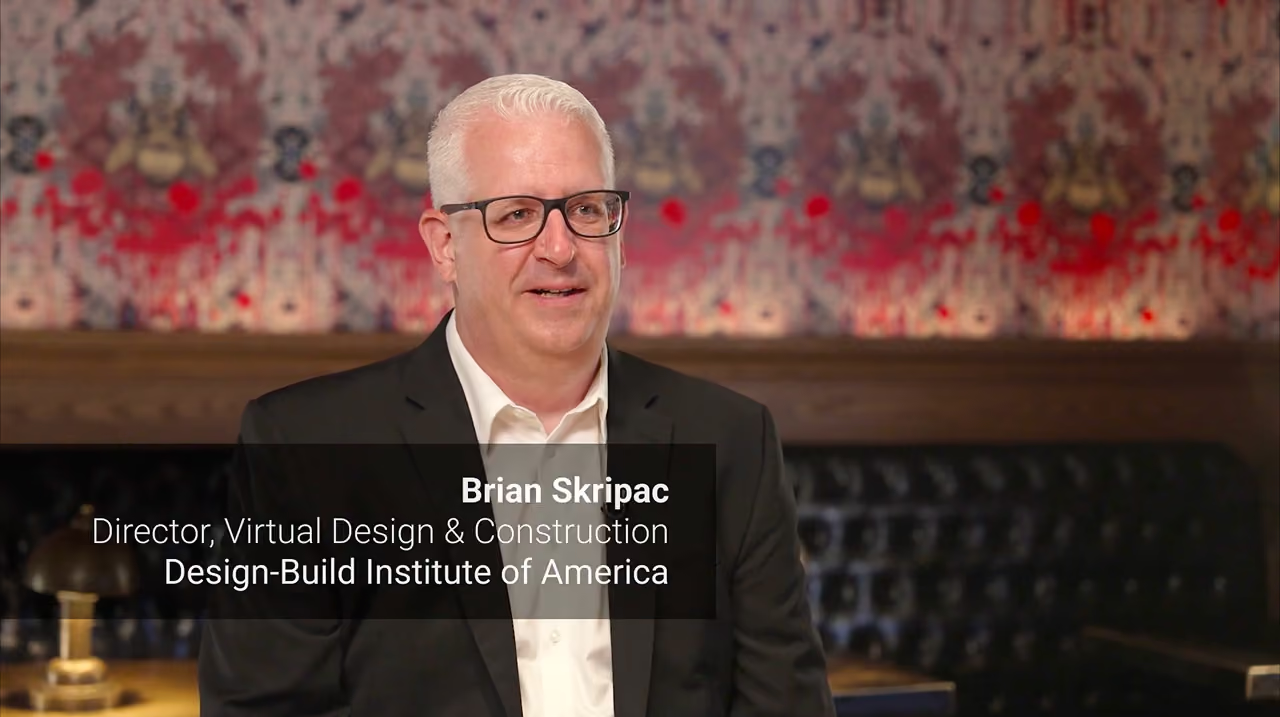
Brian Skripac, Director of Virtual Design and Construction at DBIA, dedicates his career to driving process improvement and building real efficiency within the construction sector. A major focus of his work at DBIA revolves around shifting the industry's perspective on design metrics—specifically, finding ways to elevate the 3D model into an official, reliable project deliverable rather than an internal afterthought.
“My overall thought of Revizto as a platform is that it is a great way to communicate, visualize and understand the building project.”
Brian Skripac, Director of Virtual Design & Construction, DBIA
While traditional two-dimensional documents remain deeply embedded as contract paperwork, Skripac emphasizes that the industry must move beyond a strictly paper-based mentality to continue advancing. The solution lies in bridging the generational and technological gap. By using advanced visual layering, teams can combine legacy drawing sets directly with multi-dimensional geometry. This enables senior office leaders who excel at parsing 2D information to instantly view, navigate, and validate the project in tandem with immersive models.
According to Skripac, this structural evolution is heavily rooted in building trust around digital information. Having accessible, immediately synchronized cloud data changes how stakeholders communicate. When teams experience rapid mobile visibility on-site alongside robust, easy-to-digest data pools, the value of modern coordination hubs spreads quickly across organizations—ultimately equipping professionals to become significantly better architects, engineers, and design-builders.
Brian’s top Revizto features:
FAQs
Senior professionals frequently possess unmatched practical experience but may prefer analyzing traditional 2D sheets over raw 3D models. The 2D Overlay feature allows teams to superimpose these flat contract drawings directly inside the 3D environment. This creates a shared spatial language where veterans and digital-native BIM modelers can evaluate the exact same area simultaneously, speeding up design alignment and training.
For decades, paper documents served as the definitive "source of truth" because they felt unchangeable and safe. Transitioning to virtual models requires absolute confidence that information is precise, easy to extract, and uncorrupted. Modern cloud platforms establish this trust by offering real-time data syncs, strict administrative controls, and accessible interfaces, ensuring that digital metrics are consistently accurate and actionable.
Design-build relies on tight coordination loops and single points of responsibility. If field teams must wait on office replies to double-check structural elements, schedules lag. Giving construction managers, engineers, and trades instant access to synchronized project intelligence via phone or tablet removes these communication barriers, allowing field operations to execute design intent predictably and safely.