
61% of clash issues routed automatically on San Francisco's most complex hospital build

Project overview
Herrero Boldt Webcor is a joint venture formed by three established US construction firms to deliver the UCSF Helen Diller Hospital Tower under an Integrated Project Delivery contract. The partners: Herrero Builders, Boldt, and Webcor, bring combined expertise in complex healthcare, commercial, and public sector construction across the United States.
The scale and complexity of a $2B San Francisco hospital
The UCSF Helen Diller Hospital Tower is a $2 billion, 900,000 sq ft healthcare facility in the heart of San Francisco, delivered under California's HCAI code, one of the most stringent healthcare construction regulations in the United States. Every element requires a documented condition and inspector approval before construction can proceed. Coordination quality is not optional. It is a permit requirement.
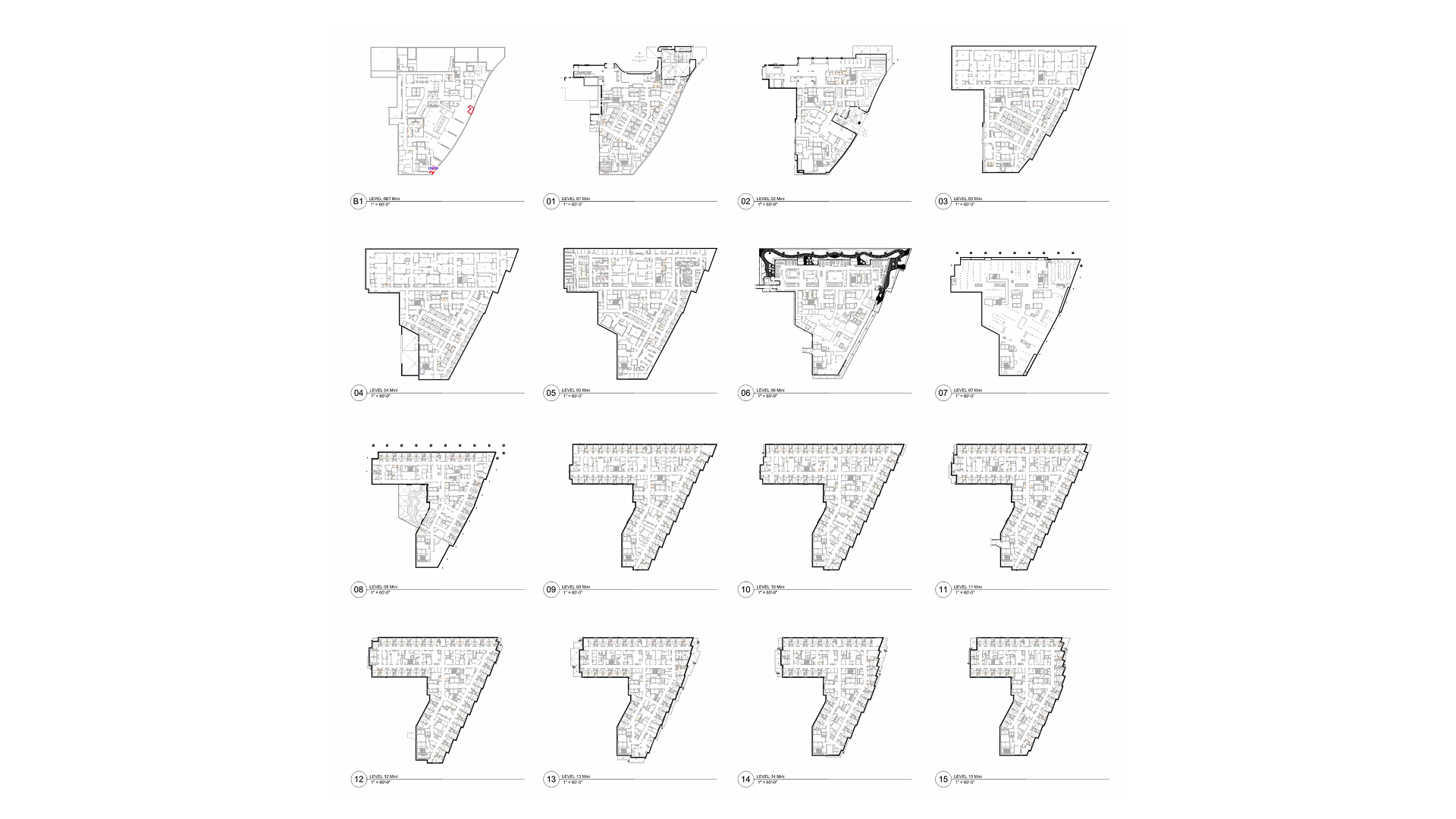
The project is structured as an Integrated Project Delivery contract with 12 risk-reward parties. No single entity sets the agenda. Every decision requires consensus. The tower sits within a portfolio of 34 projects, comprising one major structure and 33 make-ready packages running in parallel. The building's floor plates change shape on every level, transitioning from a near-triangular form on the lower floors to a narrowing profile above. As a result, no two coordination zones are geometrically identical.
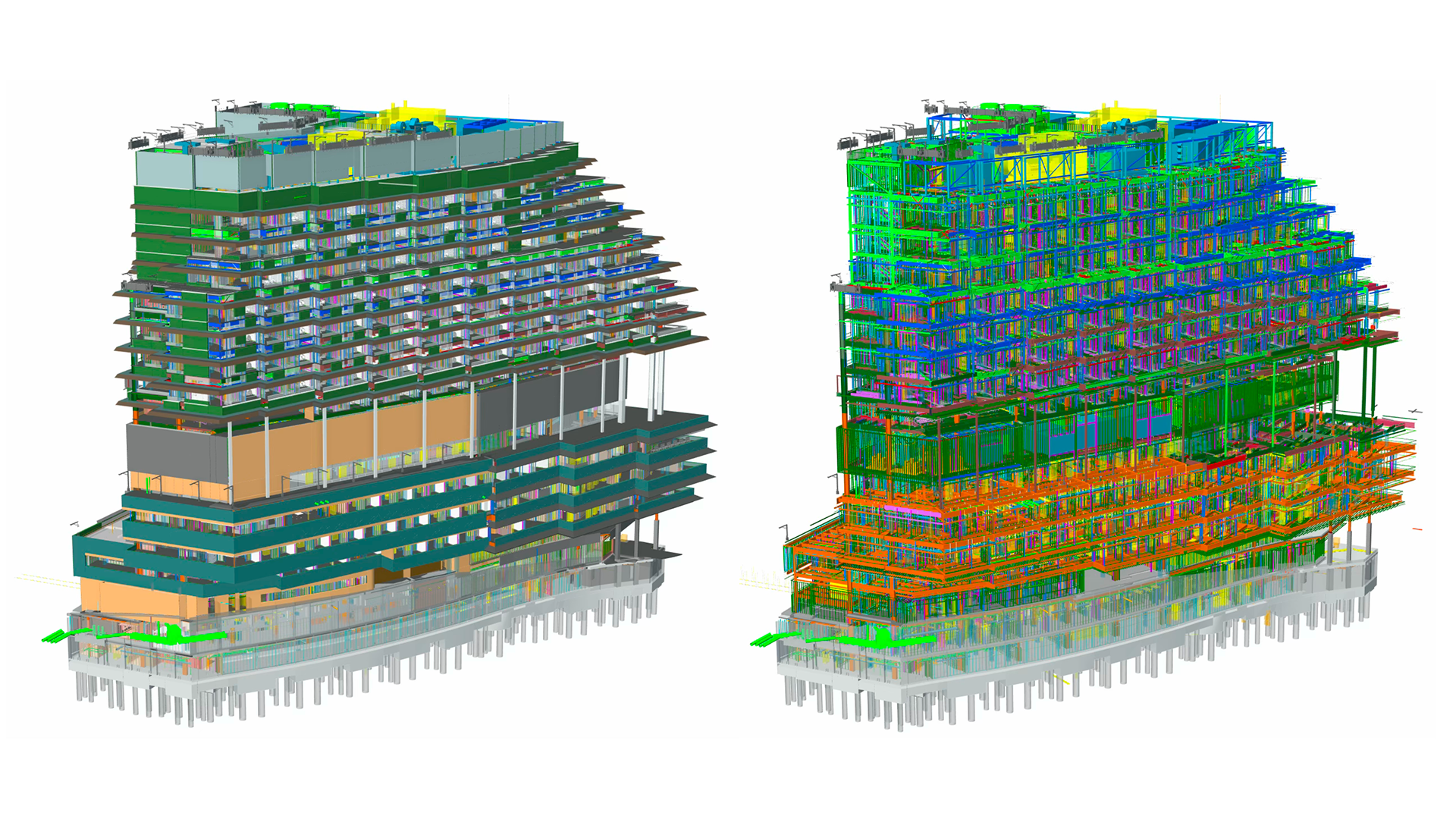
At the center of this complexity sat a model environment containing 249 files, 1.6 terabytes of data, 130 active modelers and detailers in coordination meetings, and a team generating more than 9,000 potential lines of communication on any given day. Before a coordination tool had even been selected, it was already clear that a standard approach would not be enough.
How Revizto turned a 1.6TB model environment into a coordination engine
When the team evaluated coordination platforms in 2023, the first tool they tried could not keep pace with the project's geometry or model volume. Clash detection ran too slowly. Graphics failed. The team needed something that could handle 249 models across Revit, Tekla, Inventor, and AutoSpring formats without breaking down.
After a month of deliberate stress-testing, the team adopted Revizto and built a coordination system designed to run reliably for 12 months without needing to be rebuilt. The setup started with 150 clash tests, iterated down to 108, and settled at 96 tests per team running every Tuesday and Thursday night. Tests were split across three independent team sets to remove single points of failure: if one set broke, coordination on the other floors continued uninterrupted.
The result was 289 clash tests running twice weekly, supported by 1,422 conditional rules. Sixty-one percent of stamps routed directly to trades without any coordinator review. By the time the project reached its final coordination levels, 120,000 issues had been identified, 107,000 resolved, and 93,000 surfaced entirely through automated workflows. The team was closing more than 500 stamps per day. Total coordination cost savings against a manual process: $500,000.
"Automate the decisions that don't require human judgment so the people on the project can focus on the ones that do. That principle scales. It works on a $2B hospital"
Laura Medina Rodriguez, VDC Project Engineer, Herrero Boldt Webcor
Eliminating false positives before the first clash test ran
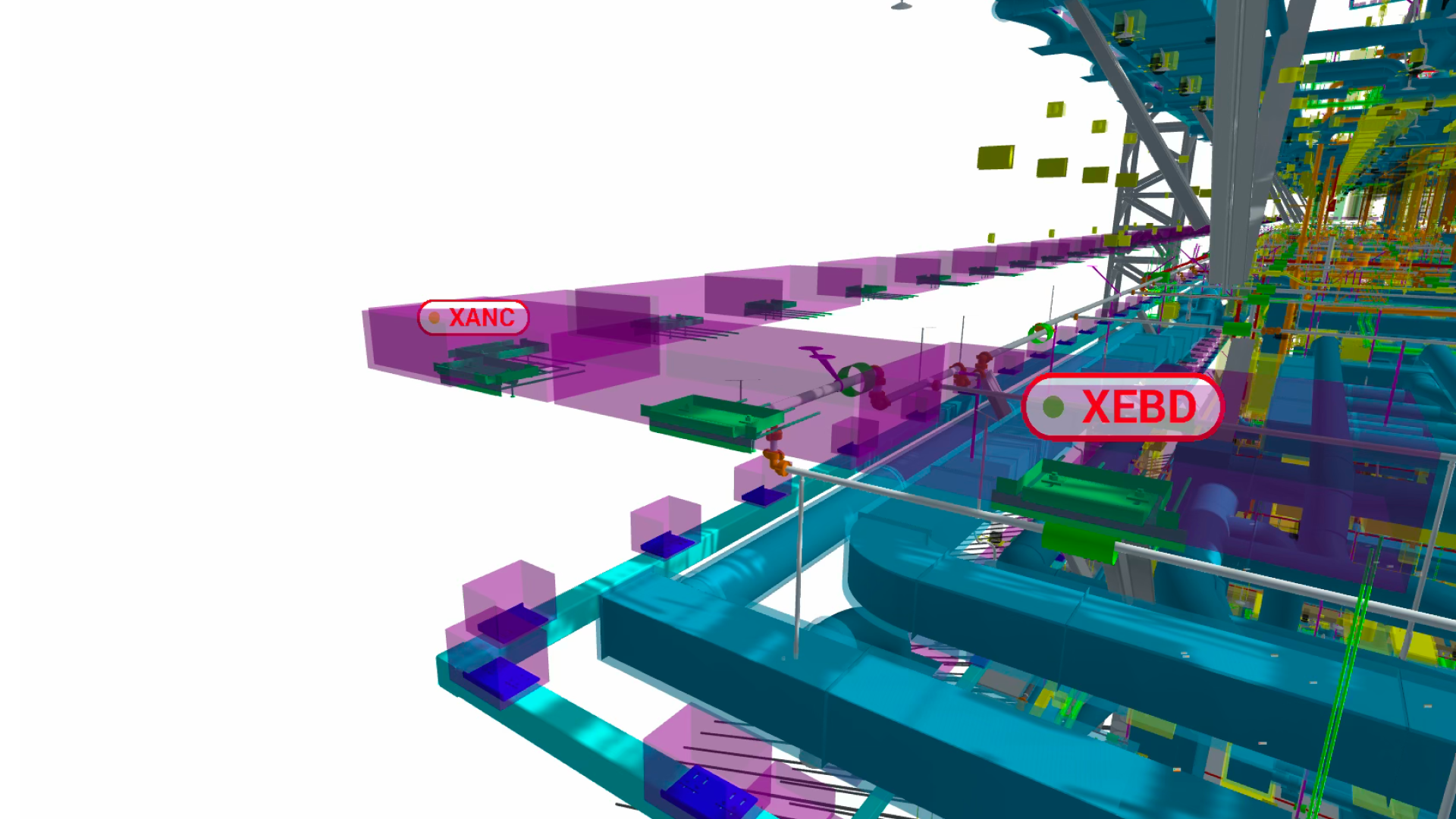
Four months before any live coordination began, Rodriguez sat down with every trade to understand how the work would actually be built. One conversation changed the entire setup. The framing trade explained they had no concern about conduit or pipe passing through the web of a steel track — only the flange. Rodriguez removed the web from every top and bottom track in the model. From that point, every clash flagged on those elements was meaningful. No false positives. No coordinator time triaging issues that would never reach the site. Designing the model around construction logic rather than raw geometry ensured that every issue routed through Revizto's Integrated Issue Management workflows was worth someone's attention.
"Automation at scale isn't just about how fast the system runs. It's about what happens when something goes wrong. Resilience has to be designed in from the beginning, not retrofitted after the first failure"
Laura Medina Rodriguez, VDC Project Engineer, Herrero Boldt Webcor
Challenges and solutions
Building for failure: why three clash test sets beat one
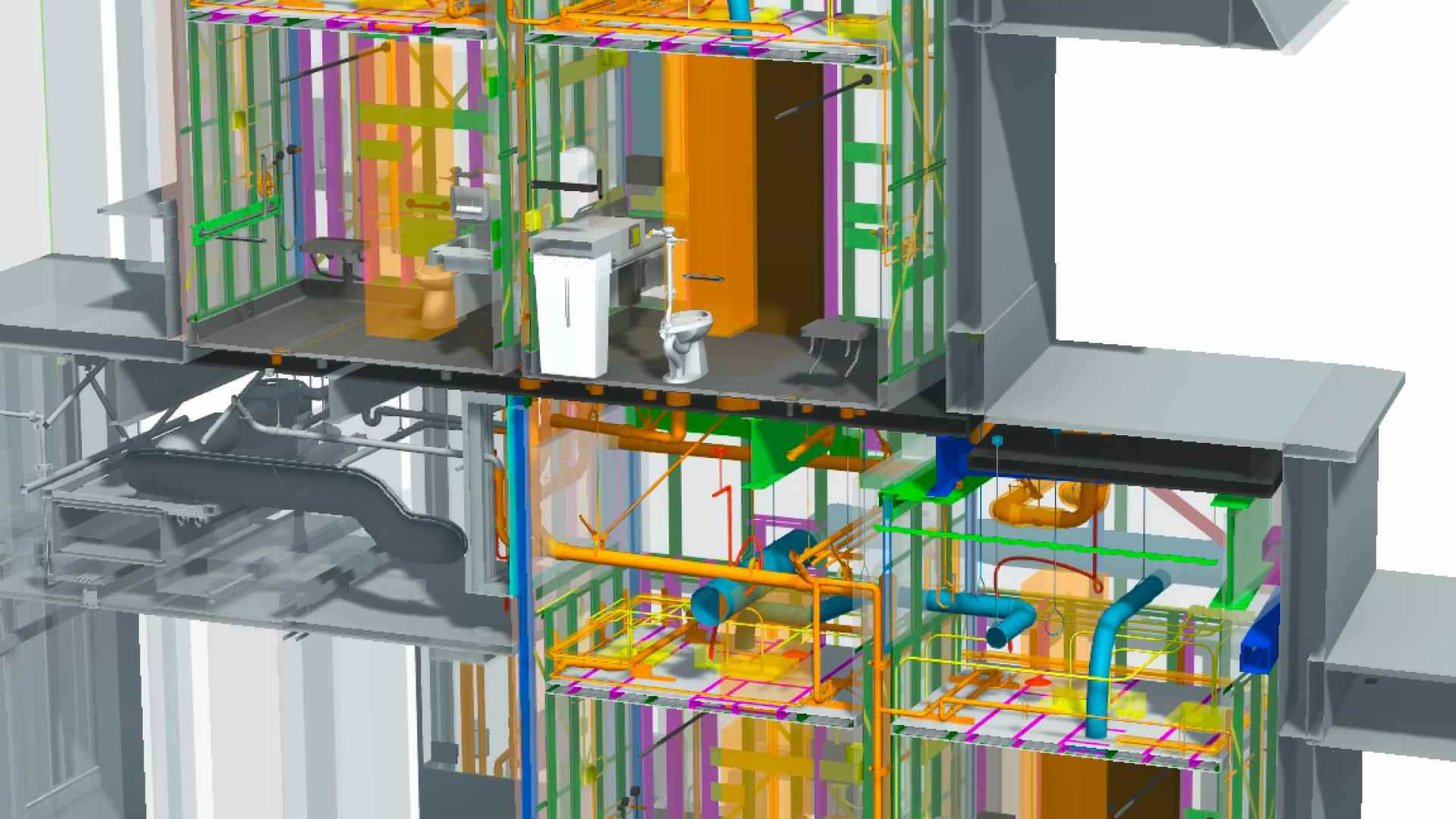
When designing the clash test structure, the recommendation was a single unified system. Rodriguez rejected it. A single system is a single point of failure: if one clash test breaks on a project running three floors in parallel, coordination stops everywhere. Three independent team sets meant a failure in one left the other two running. The team also staggered system release within each level — starting with main distribution, then releasing gravity hangers several weeks later. Issue Automations within Revizto controlled the pacing, ensuring trades always had a manageable, logical volume of work. The result: 289 clash tests running twice weekly across a 12-month coordination schedule without a full coordination halt.

How Revizto Collaboration Hub enabled the UCSF Helen Diller Hospital Tower
Collaborative Clash Automation: Enabled 289 clash tests to run twice weekly with 1,422 conditional rules, routing 61% of stamps directly to trades and surfacing 93,000 issues through automated workflows — saving an estimated $500,000 in coordination costs.
Integrated Issue Management: Provided the tracking, routing, and closure infrastructure to manage 120,000 stamps across 130 active modelers, closing more than 500 issues per day while maintaining a complete audit trail tied to HCAI permit requirements.
Advanced Automations: Allowed the team to build custom conditional logic — including prefab scope priority, seismic brace assignment, and trade-specific routing rules — reducing manual triage from 100% to 39% of clashes.
Stamps & Issue Workflows: Custom status labels — including "Design Engineering Constraint" in place of a standard open status — created clear urgency signals for the design team within tight six-week coordination windows and preserved data integrity across the full project lifecycle.
Dynamic Groupings: Supported the three-team coordination structure by organizing clash tests and issue sets by floor and team, enabling work to continue on other levels when individual tests required attention.