New Research Reveals Global Construction Coordination Crisis
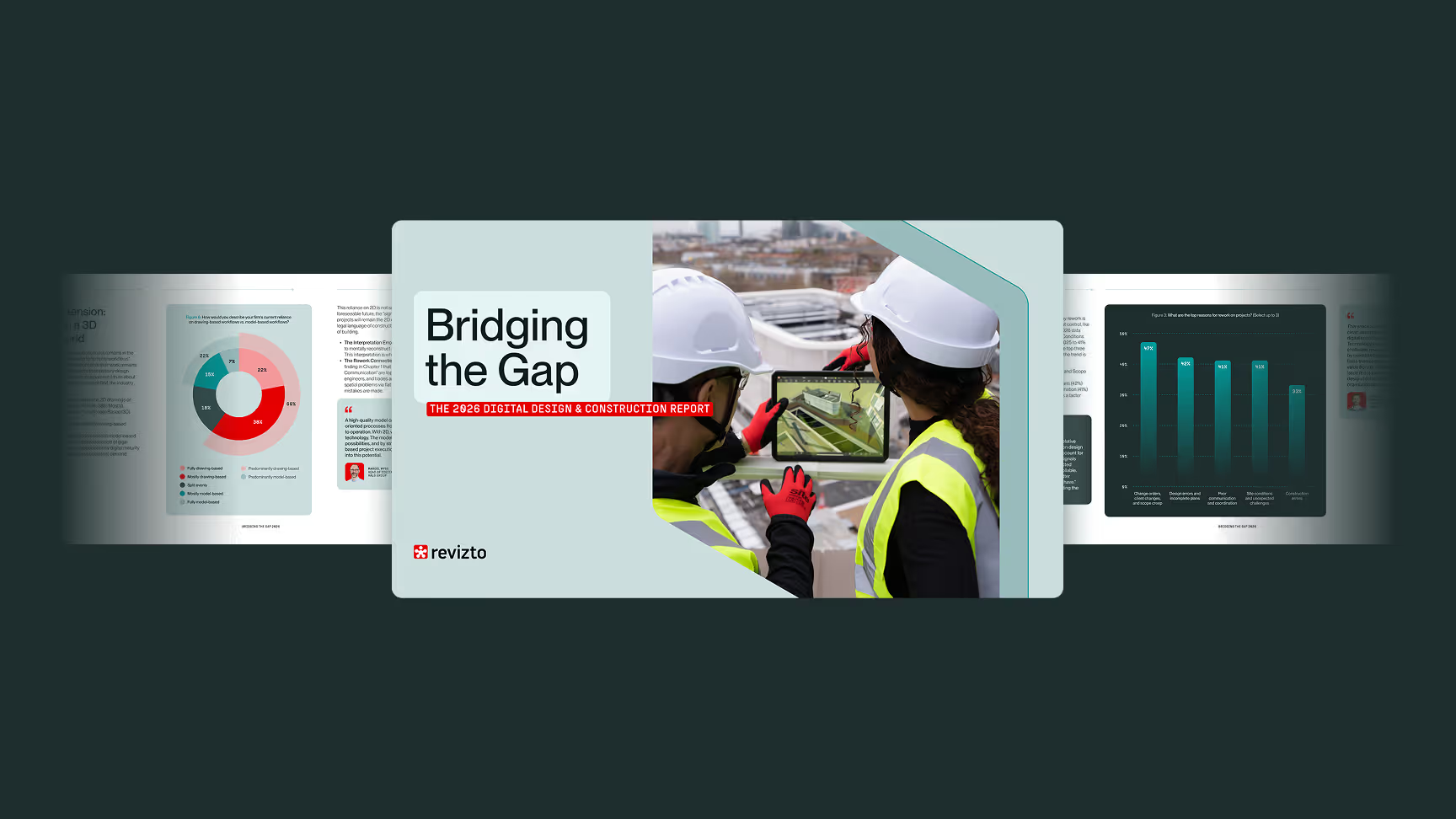
Second annual ‘Bridging the Gap’ report from Revizto finds 9 in 10 AECO teams still blow their budgets as project complexity outpaces execution
April 8, 2026 – Lausanne, Switzerland – A growing disconnect between digital ambition and on-the-ground execution is driving a coordination crisis across the $13 trillion global construction industry, according to new research from Revizto, the leading collaboration platform for the Architecture, Engineering, Construction & Operations (AECO) sector.
The company today released its second annual Bridging the Gap: 2026 Digital Design & Construction Report, based on insights from more than 2,000 global AECO professionals.
The global BIM software market alone is projected to grow from over $4 billion in 2024 to nearly $11.36 billion by 2031. Yet despite years of investment in digital transformation, 92% of respondents still report budget overruns of 6% or more – highlighting a widening gap between strategy set in the boardroom and execution on the job site.
While the industry continues to invest heavily in technology, core project outcomes are failing to improve at the same pace. Time is the top barrier to technology adoption for the second year running (32%), and 60% of workflows are still mostly or entirely based on 2D drawings limiting the impact of digital tools. The challenge is not access to technology – but the ability to implement it effectively within increasingly complex project environments.
While technology integration remains the top challenge businesses face, project complexity and coordination has surged from fifth to second in just 12 months. At the same time, poor communication and coordination is now cited by 41% of global AECO teams as a leading cause of rework. Together, these trends point to a critical inflection point: the industry is no longer facing a technology adoption gap, but a long-standing execution challenge that will only continue to accelerate as complexity rises.
This challenge is echoed by Revizto customers addressing complex global projects.
“The most successful projects I've been involved in have been those where, from day one, everyone has taken the time to fully understand the scope and requirements, the options and approach, and worked together to document not just the decisions but the rationale, too. And they maintained that continuity of knowledge through delivery. An informed team – from clients to consultants, contractors, and facilities – all on the same page and working together can avoid many issues at source.”
Ian Besford, Global Digital Delivery Leader, Mott MacDonald
Even with advances in technology and AI, the industry is still falling short of the fundamentals when it comes to project delivery. The report also reveals a concerning normalization of underperformance: 45% of AEC leaders report cost overruns of 6-10%, while 42% report overruns of 11-20%. This clustering suggests the industry has effectively built in a tolerance for missing targets by around 10% – representing billions in lost value across project cycles.
"The global AECO industry is stuck between digital ambition and physical reality. The story of construction in 2026 is not stagnation, but uneven progress. This report shows that leaders and their teams understand what needs to change, but knowing what to do and having the infrastructure to actually do it are two different things. Coordination is where projects succeed or fail. Right now, too many teams are running sophisticated digital strategies on top of fragmented workflows. Until that gap closes, overruns, rework, and delays will remain the norm, not the exception. Without solving coordination at scale, more technology alone will not fix project outcomes."
Arman Gukasyan, Founder and CEO, Revizto