Delivering One New Zealand Stadium $26.6 million under budget and 5 weeks early
Project overview
Populous is a global architecture and design practice specializing in stadiums, convention centers, and major event destinations. Warren and Mahoney is one of New Zealand’s leading multidisciplinary design practices, while BESIX Watpac is an international construction company delivering complex projects across Australia and New Zealand. Together, they led the design and construction of One New Zealand Stadium.
The final anchor project in Christchurch’s rebuild
More than 15,000 earthquakes reshaped Christchurch over a decade. By the time One New Zealand Stadium at Te Kaha entered construction, it represented much more than a new sports venue. It was the final anchor project in the city's rebuild and one of the most closely watched construction projects in New Zealand.
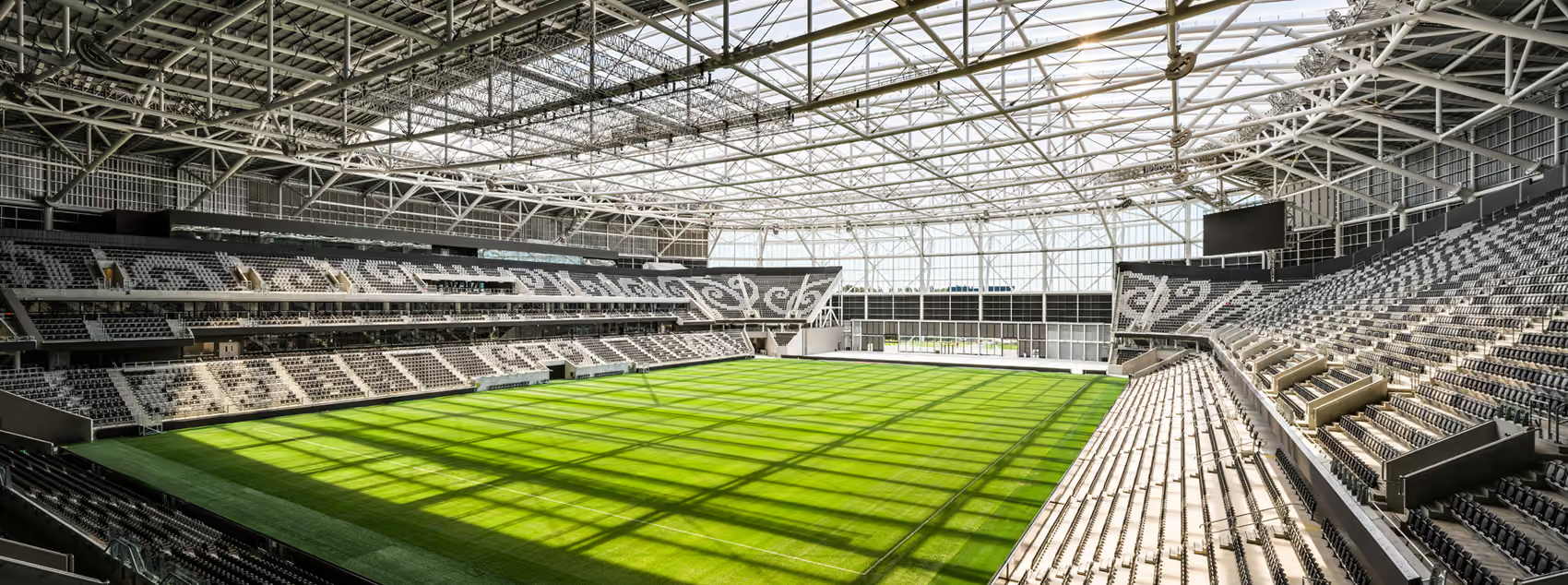
Designed by Populous and Warren and Mahoney and delivered by BESIX Watpac for Christchurch City Council, the venue accommodates 25,000 permanent seats, expands to 30,000 for field sports, and can host more than 36,000 people for concerts and major events. It was designed to bring major sports and entertainment back to Christchurch while creating a place for the community to gather once again. That connection to place is reflected throughout the venue, from the façade inspired by the Canterbury landscape to the kōwhaiwhai pattern inspired by the hammerhead shark woven through the seating bowl.
The expectations were high, as was the project’s seismic complexity. The stadium effectively operates as seven independent buildings. The primary roof and façade sit above six separate structures that can each move independently during an earthquake while continuing to function as a single venue.

The roof presented another challenge. The venue needed to provide a fully enclosed experience for spectators while still supporting a natural grass pitch below. At the time of delivery, this had only been achieved once before anywhere in the world. Making that possible required extensive analysis of sunlight, airflow, acoustics, crowd movement, and stadium operations.
"There weren't one or two earthquakes. There were more than 15,000 over a 10-year period. A number of anchor projects have been delivered since then, but for the people of Christchurch, One New Zealand felt like the final piece of a very long journey. It was incredibly powerful because it gave the city a sense of closure."
Matt Body, Architect and New Zealand Sport and Recreation Sector Lead, Warren and Mahoney
Keeping a complex project ahead of schedule and under budget
Delivering One New Zealand Stadium meant coordinating dozens of internationally distributed organizations across design and construction, all while working under intense public scrutiny. Keeping teams aligned was just as important as solving the project's engineering challenges.
Using Revizto, the team worked from a shared coordination environment where they could review federated models, identify issues, and make decisions together. Because project information was presented visually, even stakeholders without a technical BIM background could understand how systems interacted, discuss design changes, and reach decisions faster.
"In Christchurch, we wouldn't have delivered under budget and ahead of schedule without that ability to see everything in one place. Everyone was working together. On a project with these time frames, that just doesn't happen without a tool like Revizto.”
Nathan Tobeck, Principal and Head of Digital Delivery, Populous

Using digital models to improve site safety
Revizto was used well beyond coordination meetings. BESIX Watpac recorded more than 2.3 million hours worked and zero Lost Time Injuries on the project, with digital models becoming an important tool for communicating complex construction activities and safety planning.
With approximately 17,500 tons of structural steel involved and major lifts reaching around 160 tons, clear communication was essential. Teams used the model to explain temporary works, installation sequences, and changing site conditions before work began.
For a multicultural workforce, visual communication also helped bridge language barriers. Toolbox talks were supported with digital models and, for high-risk activities, delivered across multiple languages to ensure teams understood exactly what was happening and where they needed to be.
Building stakeholder trust through project transparency
The project team provided Christchurch City Council and its project managers with direct access to the model. That transparency helped build trust on a project that was constantly in the public eye, allowing stakeholders to review information for themselves, understand project decisions, and stay closely connected to progress.
"On One New Zealand Stadium, we gave the project managers and Christchurch City Council direct access to the model — the same view everyone else had. We had nothing to hide. That transparency built real trust, and with that trust came faster, more informed decision-making. That's one of the biggest success stories of the project."
Gilbert Gouveia, Head of Sector – Stadiums and Venues, BESIX Watpac
The result was a stadium delivered $26.6 million under budget and five weeks ahead of schedule, opening to sold-out crowds in April 2026. For many in Christchurch, it also marked the emotional completion of the city's post-earthquake rebuild.
Challenges and Solutions

How Revizto Collaboration Hub enabled One New Zealand Stadium’s success
Connected drawings and models within a single environment, helping teams coordinate complex project information.
Integrated Issue Management
Enabled stakeholders to create, assign, track, and resolve issues directly within the project environment.
Collaborative Clash Automation
Supported coordination across structural, architectural, and MEP systems throughout delivery.
Seamless Model Navigation
Made complex project information accessible to site teams, consultants, contractors, and client representatives.
Bring Your Own Workflow
Supported existing delivery processes while improving communication across the project team.
FAQs
Yes. This was central to how One New Zealand Stadium was delivered. Project information was presented visually so that stakeholders without a BIM background could understand how systems interacted, discuss changes, and make decisions. Revizto's seamless model navigation is designed to be accessible to everyone from site workers to client executives, without requiring BIM expertise.
One New Zealand Stadium required coordinating dozens of internationally distributed organizations across design and construction. Revizto provides a cloud-based shared environment where all teams — regardless of location, discipline, or time zone — work from the same federated model. Issues are created, assigned, and tracked spatially in 2D and 3D, so decisions have a full documented history and nothing falls between teams.
Traditional clash detection tools require separate applications for workflow management and don't keep all stakeholders in the same environment. Revizto combines federated model review, issue management, clash automation, and stakeholder access in one platform. On a project like One New Zealand Stadium — where the client, architect, engineer, and contractor all needed the same view — a single unified environment was essential to the delivery outcome.