.svg)
From 12 iPads to 80: how W.D. Manor brought the model to field workers
Project overview
W.D. Manor Mechanical is a family-owned mechanical contractor founded in 1945, based in Arizona. Specializing primarily in healthcare, the company delivers design-build, design-assist, and Integrated Project Delivery projects. Their in-house fabrication facility spans 30,000 sq ft and supports full MEP prefabrication programs across Arizona.
When the gap between coordination and the fab shop costs you rework
W.D. Manor Mechanical has been building complex healthcare facilities since 1945. As a family-owned mechanical contractor working across design-build, design-assist, and IPD delivery models, they operate at the intersection of precision design and high-velocity fabrication. Their in-house shop, comprising 20,000 sq ft of interior space and 10,000 sq ft behind it, runs a strict production calendar: five days minimum for procurement, two weeks for fabrication, shipping, and scheduling. Material needs to arrive on site ready to install, in the right sequence, at the right time.
Getting there requires "perfect information" finalized three weeks before site delivery. Achieving this above 85% of the time, across all projects, is a success. For a long time, that information traveled through spreadsheets, emails, and Bluebeam markups, a manual chain that broke down every time a design change happened after model sign-off. The gap between what was coordinated in BIM and what reached the people cutting, assembling, and installing was exactly where rework lived. Recognizing the need to eliminate that disconnect, the company launched an initiative in 2019 to bridge the divide between virtual design and construction operations. The objective was straightforward: create a reliable flow of information from design, coordination, fabrication and installation, so that decisions made in the model could be executed with confidence in the field.
How Revizto and Stratus became one connected workflow
The answer was not a single tool; it was two tools working as one. Revizto owns the upstream half of W.D. Manor's MEP lifecycle: coordination, clash detection, issue tracking, and field visualization. Stratus owns the downstream half: model breakout, work package management, fabrication tracking, and part-level status from procurement to inspection. Together, they answer the two questions that define a working build: "Is the model right?" and "Are we building it right?"
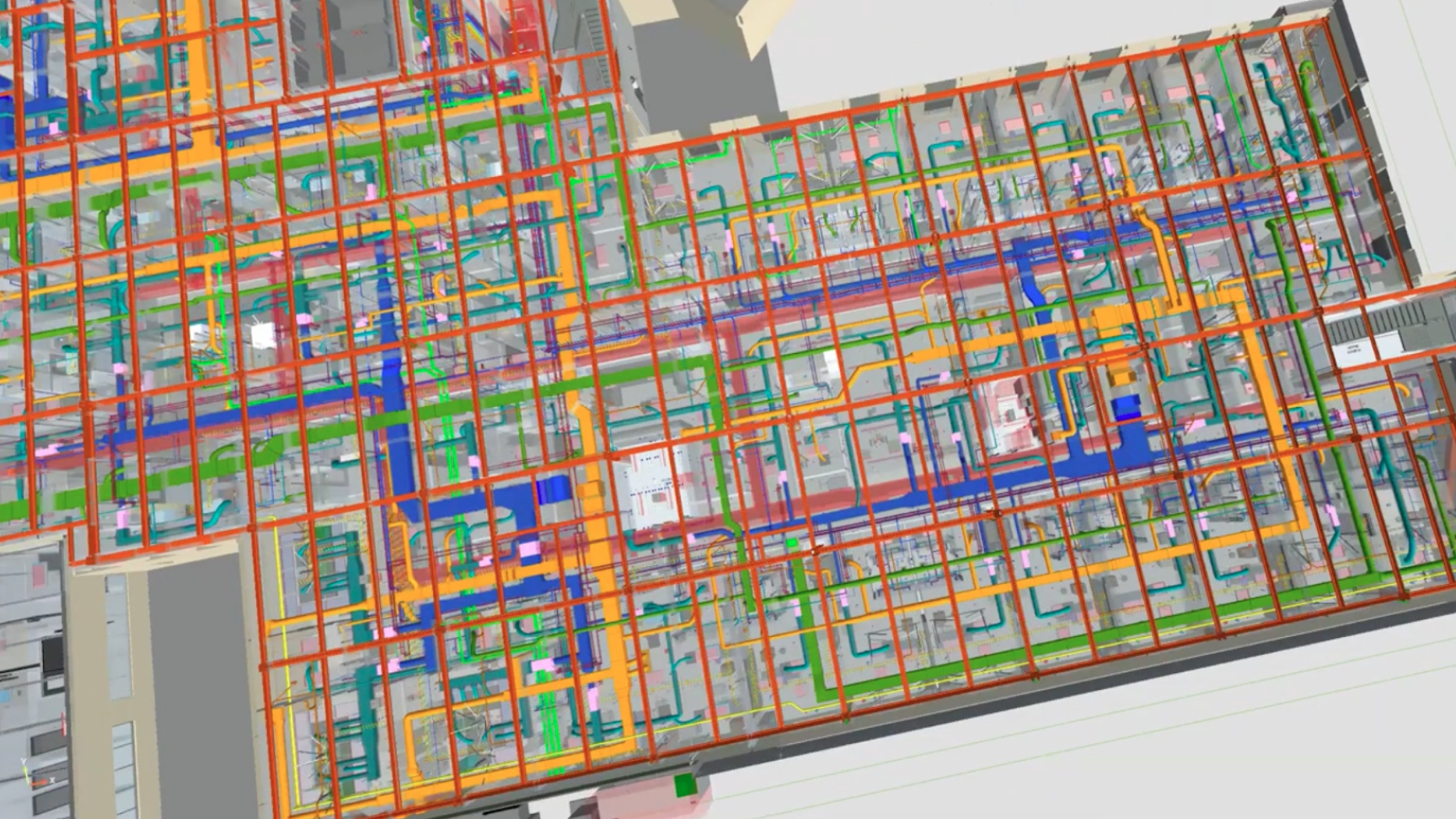
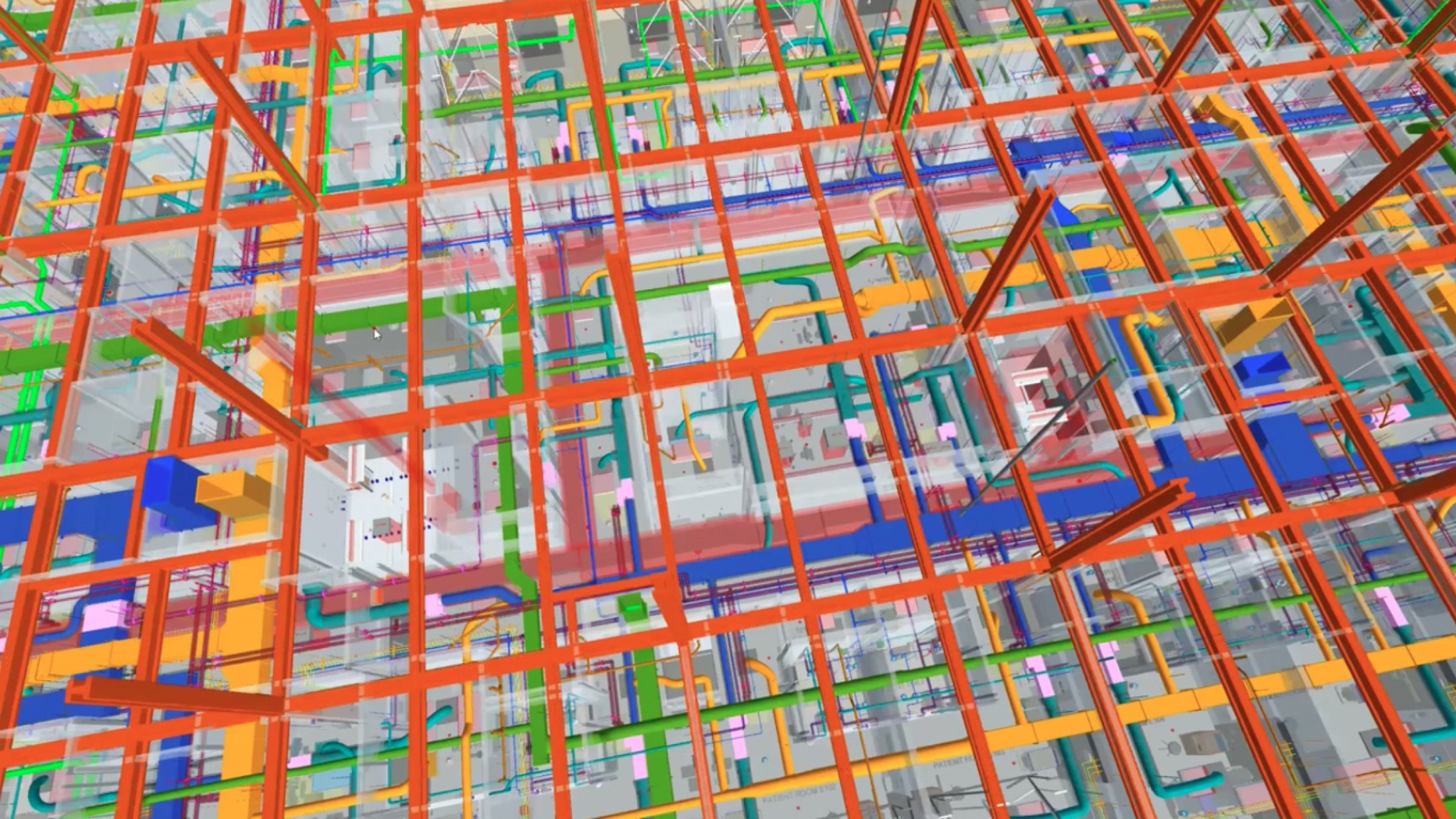
W.D. Manor publishes directly from the engineer's Revit model to Stratus, modeling in place with the content they will actually fabricate and building a database of installation hours, dimensions, and pricing codes for every part. That data flows into Revizto as live dashboards. A project manager can see that Level 2 Medical Gas has 15,000 parts requiring sign-off by a specific date, months before the deadline. The field team, now working from over 70 iPads, sees the same model with graphic overrides color-coded to match Stratus fabrication status, knowing instantly what is planned, in progress, installed, or off-limits without finding a foreman.
"We've gone from 12 iPads in the field a few years ago to upwards of 80 now because this is catching fire. Even those hesitant at first are manipulating the model by the end of the project"
Adrian Guerrero, VP of Production Operations, W.D. Manor Mechanical
The three-week planning cycle: building for what the field actually needs
Six weeks before installation, W.D. Manor gives the field team areas in the model for fly-throughs. The field does not just consume the model; they curate it. They flag logistics realities the BIM team cannot see from the office: elevator access constraints, whether a 20-foot assembly needs to ship as 12-foot lengths, and what sequence the installation floor actually demands. That feedback travels back upstream before any material leaves the shop. By the time a spool ships, 85% of the information is locked, providing enough certainty to cut without rework and not so much waiting that the schedule slips. The model is not a deliverable. It is the production plan.
"Our goal is to get 85% of perfect information three weeks before it needs to be on site. The model has to be ready to assemble. It levels every process up because the model has to be perfect"
Adrian Guerrero, VP of Production Operations, W.D. Manor Mechanical
Challenges and solutions
Sequencing by QR code: who needs to be out of the way before you start
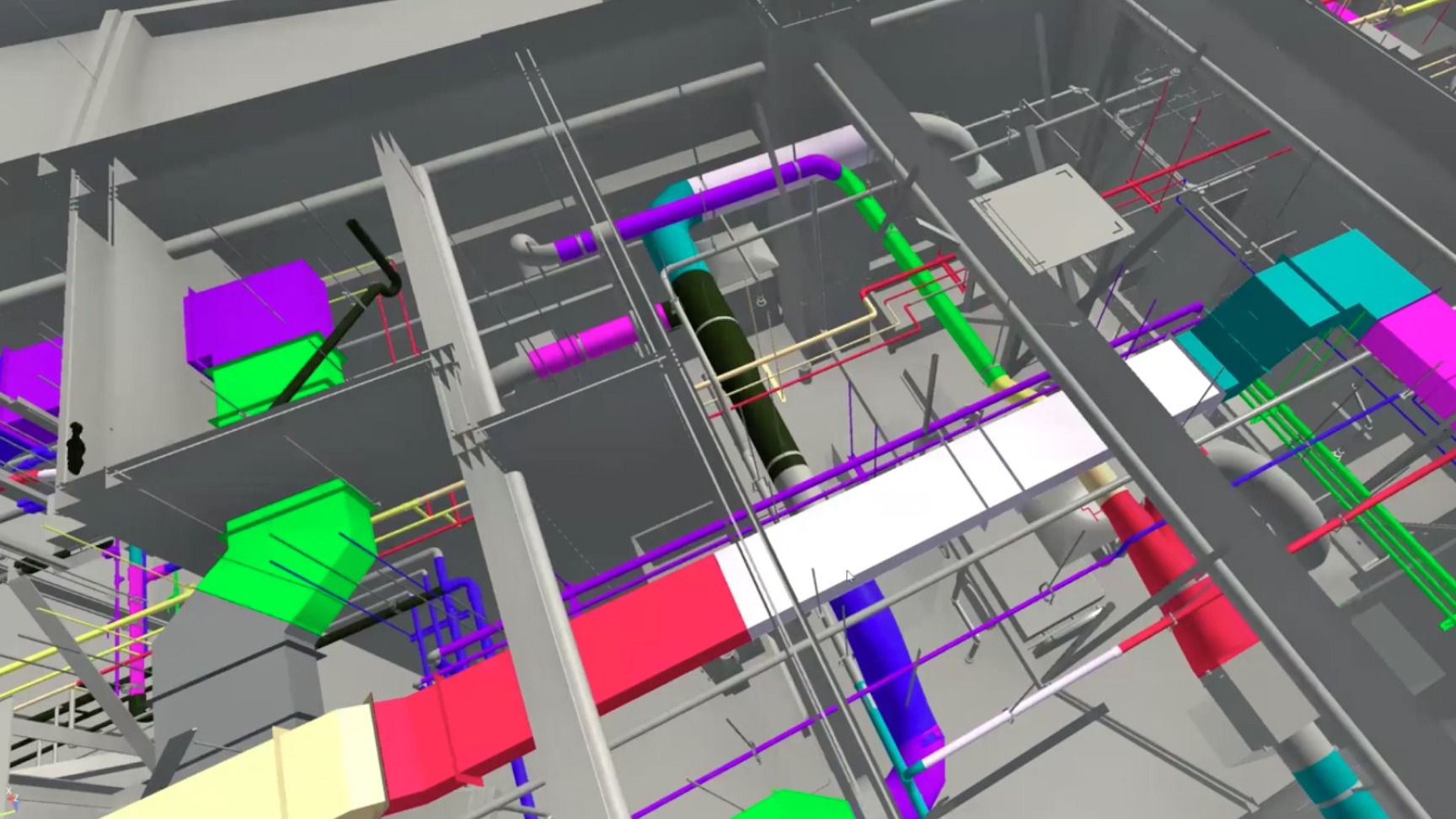
Before this workflow, a duct installer could put up an entire duct section before discovering the medical gas crew needed to run above it. In combination with graphic overrides, access to Stratus package information through a QR code and custom properties, a planner can make installation decisions without having other trade leaders present. The required date for each package guides perfect installation in the field. If the date has not passed, the installer holds their install to not impede on the other team's fabrication install. The same color-coded graphic overrides that track fabrication status also drive sequencing: packages past fabrication planning are highlighted; installed systems turn transparent gray and step out of view. The model does not just show what has been built it shows what order it goes in.
How Revizto Collaboration Hub enabled W.D. Manor Mechanical's success
Unified 2D/3D Environment: Delivered 3D models with 2D documents to 70+ iPads across the field, including offline access where internet is unavailable. Every installer has the same live source of truth as the BIM team.
Appearance Profiler: Color-coded graphic overrides matching Stratus fabrication status let field crews know at a glance what was planned, in progress, installed, or locked, without tracking down a foreman.
Connected Project Intelligence: Live dashboards surfaced part-level data from Stratus, part counts and milestones, dates by zone. This allows the BIM team to look two months ahead and guide production priorities in the fab shop.
Integrated Issue Management: Stamps connecting BIM, the fab shop, and field crews minimized manual floor walks and typed reports with a direct, traceable feedback loop for quality control, team education, and trade damage tracking.
AR, VR & QR Codes: QR codes tied packages to sequencing data, letting crews check other trades' schedules before starting installation. AR enabled quick field gut-checks and on-site clash confirmation without needing the BIM team present.
FAQs
The Appearance Profiler lets users isolate, color-code, or hide model elements to highlight what matters, then save those visual setups as personal or shared templates, all without altering the underlying model data. For W.D. Manor, this meant color-coded overrides matching fabrication status, so crews on over 70 iPads could see instantly what was planned, in progress, installed, or off-limits without finding a foreman.
Connected Project Intelligence turns raw project data into live dashboards, trend charts, and API-connected data tied to a company's broader business intelligence. It gives teams a clear read on project status well ahead of deadlines. For W.D. Manor, that meant a project manager spotting that a single zone had 15,000 parts requiring sign-off by a specific date, months before that deadline.
Stamps are configurable, reusable templates placed directly on drawings or models to instantly create issues with pre-filled metadata, while issue workflows let teams define custom issue types with their own statuses. For W.D. Manor, Stamps connected BIM, the fab shop, and the field in one audit trail, replacing manual floor walks and typed reports with visual issue records.
AR overlays the 3D model onto the real job site to catch discrepancies early; VR lets teams physically walk through future construction phases to check feasibility and safety; and QR codes link real-world objects to their exact model location by scanning a printed tag. For W.D. Manor, QR codes tied to Stratus package data let installers check other trades' sequencing before starting, addressing conflicts (like a duct run installed before the team realized medical gas needed to pass above it) that had previously surfaced only after work was already in place.
It combines 2D drawings and 3D models in one interactive workspace, accessible online, offline, in the office, or on site, with synchronized markups and instant navigation between a model point and its corresponding 2D drawing. This is what let W.D. Manor scale from 12 to 80 iPads in the field over a few years, giving every installer the same live source of truth as the BIM team.
Clash detection catches multiple conflict types, including hard clashes, clearance issues, and duplicates, early, while issue tracking assigns, follows, and resolves the resulting tasks with location data tied to the 2D/3D model. For W.D. Manor, this is the "upstream" half of the workflow that answers "Is the model right?" before Stratus's downstream fabrication tracking answers "Are we building it right?"


.avif)
.svg)