Who owns your project data? How AECO firms can stay in control
See how Revizto fits your workflow
In today’s digital AECO industry, data is as essential as concrete or steel. But if that data is stored in the wrong place, firms can suddenly lose access to drawings, models, and coordination records. Projects stall, deadlines slip, and legal risks grow.
As construction workflows increasingly move to the cloud, data sovereignty (where project data is stored and which laws govern it) has become a critical concern for firms.
Revizto helps address these challenges by providing secure data governance tools that allow organizations to manage where their project data lives, who can access it, and how it can be retained long term.
1. Choose where your project data is hosted
One of the most effective ways to maintain data sovereignty is through regional data hosting. When project data crosses international borders, it may become subject to foreign regulations or privacy laws that conflict with a firm's local requirements.
This is particularly important for infrastructure, government, and public-sector construction projects where strict data residency rules often apply.
Revizto addresses this challenge by allowing organizations to choose where their project data is hosted. When creating a project, teams can select regional server locations including:
- United Kingdom
- United Arab Emirates
- United States
- Canada
- Europe (Ireland)
- Australia
- Singapore
By hosting project information within specific regions, firms can ensure their BIM data remains governed by the legal frameworks that apply to their operations.
2. Two-factor authentication, audit trails and permissions
Data sovereignty is not only about location. It is also about control, specifically, who has access to sensitive project information.
Construction projects often involve dozens of organizations, from architects and engineers to contractors and consultants. Without strong governance controls, sensitive data can easily be exposed or mismanaged.
Revizto helps organizations maintain control through several governance tools:
Two-factor authentication (2FA)
Administrators can require two-factor authentication for all users, adding an additional layer of protection against unauthorized access.
Role-based permissions
Teams can define exactly who can view, edit, or manage specific project data. This ensures that sensitive information remains accessible only to authorized stakeholders.
Audit trails
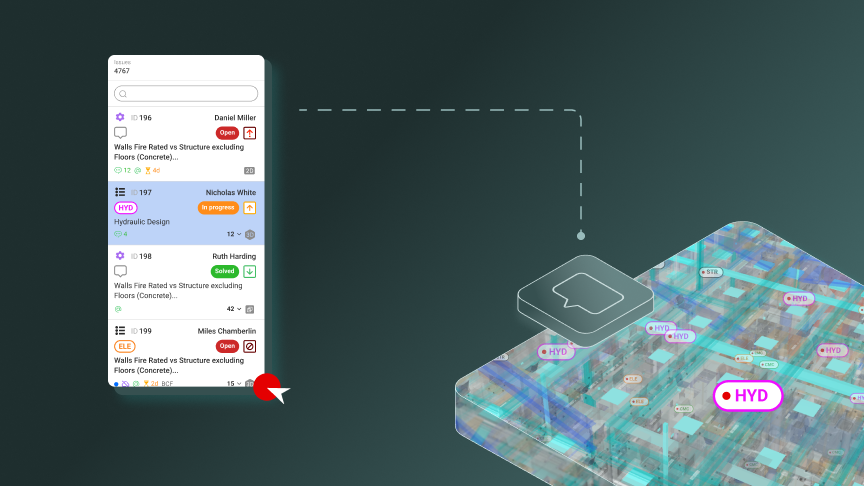
Every issue, comment, and action inside the Revizto Issue Tracker is recorded. This creates a transparent history of project decisions and helps maintain data integrity throughout the project lifecycle.
Together, these controls allow firms to manage project data securely while maintaining collaboration across large project teams.
3. Balance cloud speed with hybrid storage
Some projects require even greater control over sensitive data. Government, defense, and critical infrastructure projects often mandate strict policies about where project files can be stored.
Revizto supports these scenarios through a hybrid storage model.
In this setup, large files such as 3D models and drawings can remain on a company’s internal network drives. At the same time, the cloud platform is used for communication, issue tracking, and collaboration.
This approach provides several advantages:
- Sensitive files remain within the company's internal environment
- Teams retain full ownership of native models
- Project coordination remains fast and accessible in the cloud
By combining internal storage with cloud-based collaboration, firms can maintain strong data control while still benefiting from modern coordination workflows.
4. Look for platform security and compliance
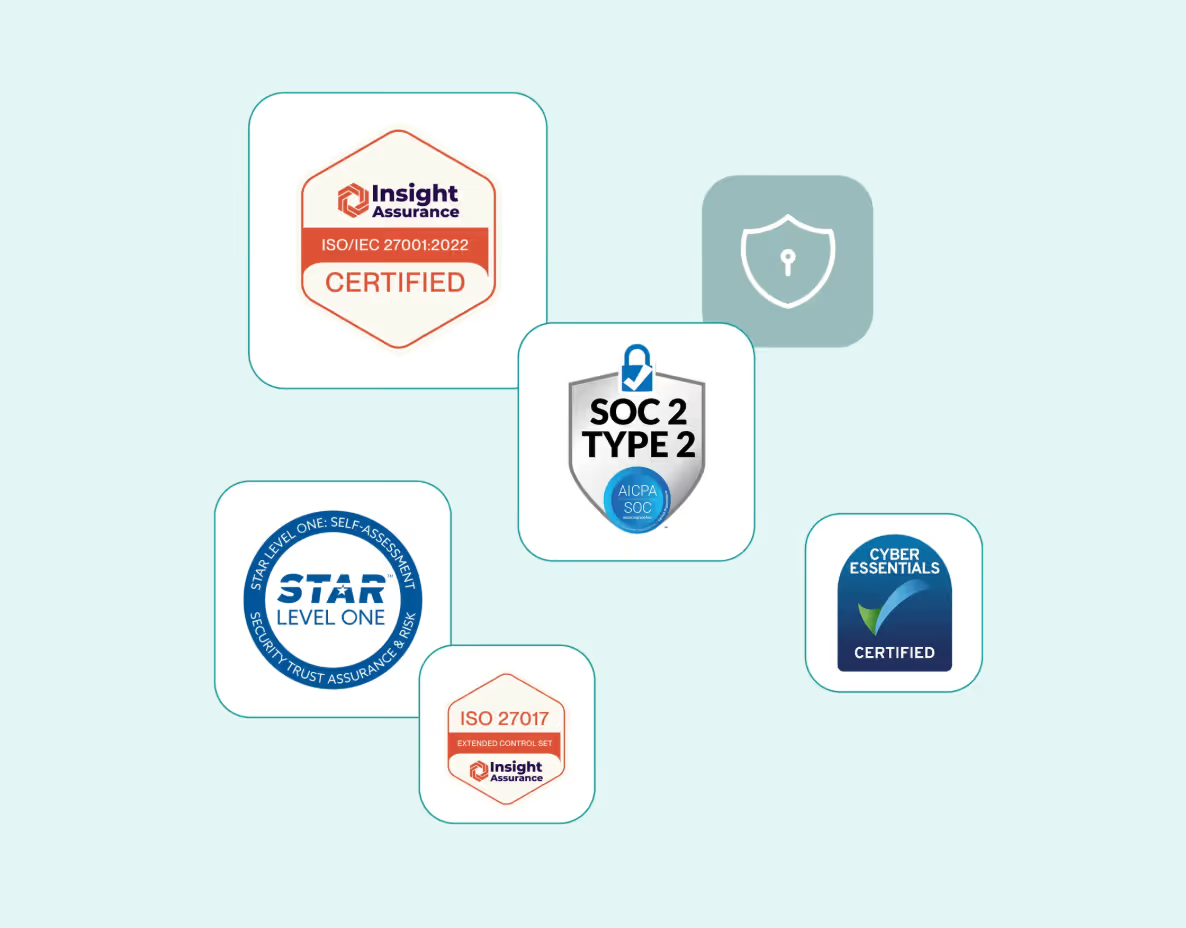
Security and reliability are also key considerations when selecting a BIM collaboration platform. Construction companies increasingly look for solutions that meet recognized global security standards.
Revizto supports secure collaboration by hosting its platform on highly compliant infrastructure such as AWS and by maintaining strong internal security practices.
For AECO firms, this means the platform can support:
- Enterprise-level security requirements
- Secure data transmission
- Reliable cloud infrastructure
- Protection against evolving cybersecurity threats
Regular platform audits and compliance checks help ensure that project data remains protected throughout the project lifecycle.
5. Maintain data ownership even if a subscription ends
Data ownership also means having the ability to leave a platform without losing access to your work.
Revizto supports long-term data access by allowing firms to retrieve project data even if a subscription ends. A 90-day retrieval period ensures teams can export project information and maintain records.
The platform also provides multiple export options, including:
- 2D drawings as PDF files
- Coordination issues exported as BCF files
- Complete project archives
Projects can even be delivered as a standalone archive file that allows teams to view 2D sheets, 3D models, and issue data without requiring an active license.
This ensures that organizations retain full access to their project intelligence long after a project is complete.
Key takeaways
- Data sovereignty determines where project data is stored and which laws govern it.
- Regional hosting helps firms comply with national data regulations.
- Strong access control prevents unauthorized exposure of BIM data.
- Hybrid storage allows companies to keep sensitive files on internal networks.
- Revizto provides the flexibility and governance tools needed to maintain control of project information.
As construction becomes increasingly digital, protecting project data is no longer just an IT concern, it is a business priority.
Maintaining data sovereignty requires a combination of secure platforms, strong governance policies, and flexible storage strategies.
By using Revizto as a secure BIM collaboration platform, AECO firms can coordinate projects efficiently while ensuring that they retain full ownership and control of their most valuable digital assets.
FAQs
Ownership of BIM project data typically belongs to the organization that created or contractually controls the information. However, when data is stored in third-party cloud platforms, firms must ensure they retain access, export rights, and control over where the data is stored. Platforms like Revizto help organizations maintain ownership by allowing regional data hosting, access control, and full project data export options.
Data sovereignty refers to the principle that digital information is governed by the laws of the country where it is stored. In the AECO industry, this matters because BIM models, drawings, and coordination data often contain sensitive infrastructure information. Using platforms that support regional data hosting—such as Revizto—helps firms ensure their project data complies with local regulations.
Construction companies can protect BIM data by choosing platforms that offer strong security controls such as encryption, role-based permissions, two-factor authentication, and audit trails. It is also important to select collaboration platforms that allow organizations to control where their data is hosted and to export their project data when needed.
When selecting BIM collaboration tools, AECO firms should prioritize features such as regional data hosting, secure user authentication, role-based access permissions, audit trails, and reliable cloud infrastructure. These capabilities help ensure that sensitive project information remains secure while still enabling efficient collaboration between project teams.
As construction projects become increasingly digital, firms rely on large volumes of project data to manage coordination, design, and scheduling. Without proper data governance, organizations risk losing control of critical project information. Strong governance frameworks and secure collaboration platforms help firms protect project data, maintain compliance, and ensure long-term access to their digital assets.